
America’s political elite is nauseating for many reasons, but perhaps most of all when they blame others for problems that are caused by misguided government policies. A stark example is the way they attacked the Facebook billionaire who moved to Singapore because of…

Dan Mitchell
Daniel J. Mitchell is the President of the Center for Freedom and Prosperity and the Center for Freedom and Prosperity Foundation. Dr. Mitchell advocates limited government and fundamental tax reform, and is the nation’s leading opponent of tax harmonization schemes developed by the Brussels-based European Union, the Paris-based Organization for Economic Cooperation and Development (OECD), and the United Nations.
In addition to fiscal policy, Dr. Mitchell is a trenchant observer of economic developments and an expert on Social Security reform – particularly the fiscal policy impact of reform and what the US can learn from other nations that have created personal retirement accounts.
Yes, the Federal Government Has a Broad Power to Tax, but that’s Different from Having a Green Light to Spend
’m not a lawyer, or an expert on the Constitution, though I sometimes play one on TV. But I can read, and I’ll agree with my friends on the left that the federal government has a broad power to tax. I wish the 16th Amendment had never been ratified, but its language…
The Crazy French Double Down on Obamanomics
Being a libertarian, I’m used to disappointment. So when something actually goes according to plan, I get very happy. On that basis, I should be utterly and deliriously overjoyed about my endorsement of Francois Hollande to be President of France. I wanted him to…
Obama’s Using Our Tax Dollars to Leverage More Food Stamp Dependency
In past posts, I’ve groused about food stamp abuse, including people using them to buy luxury coffee at Starbucks and to purchase steaks and lobster. I’ve complained about college kids scamming the program, the “Octo-Mom” mooching off the program, and the Obama…
On Reason TV, Andrew Ferguson Discusses the Parasite Economy of Washington, DC
Back in February, I posted this startling map showing that 10 of America’s 15-richest counties are the bedroom communities surrounding Washington, DC. There’s a lot of money in Washington because federal bureaucrats are wildly overpaid, as I document in this video,…

We’re Sending Tax Dollars to a Paris-Based International Bureaucracy So It Can Work with “Occupy” Nutjobs to Push for Higher Taxes
I’m not a big fan of the Organization for Economic Cooperation and Development. This Paris-based international bureaucracy doesn’t get as much attention as the United Nations or International Monetary Fund, but it’s probably does more damage to freedom and prosperity…
The “Remain-Calm-All-Is-Well” Image of the European Crisis
Yesterday, I did a serious post outlining the absurd policies being pursued in France, Italy, and Greece, along with some much-deserved scorn for the throw-fuel-on-the-fire statist analysis of the International Monetary Fund. Later in the day, I posted a cartoon about…
Europe’s Self-Inflicted Decline: French Taxing, Italian Regulating, Greek Mooching, and IMF Economic Illiteracy
Every day brings more and more evidence that Obamanomics is failing in Europe. I wrote some “Observations on the European Farce” last week, but the news this morning is even more surreal. Let’s start with France, where I endorsed the explicit socialist over the…
Notwithstanding David Cameron’s Statolatry, Tax Avoidance Is Both Legal and Moral
I’m not a fan of David Cameron, the United Kingdom’s Prime Minister. Even though he belongs to the Conservative Party that produced the great Margaret Thatcher, Cameron seems to be a bit of guilt-ridden statist with his finger always in the air to see which way the…
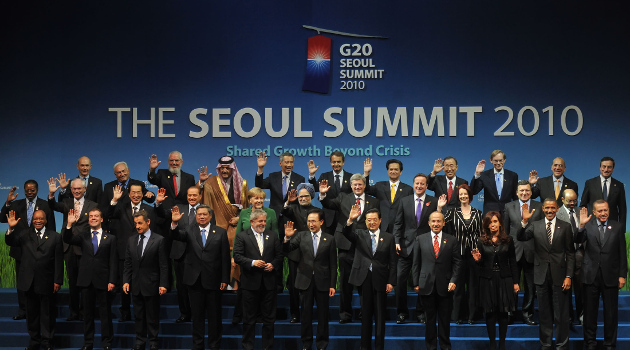
Time to Fight Statism by Shutting Down the G-20
These soirees are more than just money-wasting junkets.