
As the national debate shifts away from the immediate issues surrounding the debt ceiling, members of Congress should focus now on the fundamental purpose of government in a free society. Current excesses in federal spending have resulted largely due to the continued…

Andrew F. Quinlan
Andrew F. Quinlan was a co-founder of the Center for Freedom and Prosperity and served as its president for over 20 years.
Before CF&P, Andrew was Senior Economic Analyst for the Republican National Committee, and then served as a top staff member for New Jersey Congressman Jim Saxton, including as senior advisor to the Joint Economic Committee.
Andrew passed away in 2022.
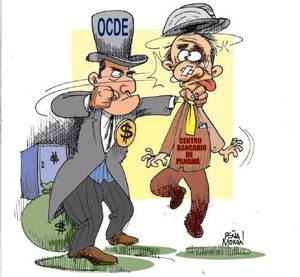
A Line in the Sand Against the OECD
CF&P recently released a paper calling on low-tax jurisdictions to resist the OECD. The high-tax European welfare states which control the OECD continue to move the goal posts and devise ever more hoops through which low-tax jurisdictions are expected to jump. As…

CF&P Testifies Against Harmful IRS Regulation
Almost ten years after first testifying against a proposal by the IRS to collect unnecessary information from foreign deposit holders, which would then be turned over to foreign governments, I once again represented CF&P and the Coalition for Tax Competition in…
When is Enough, Enough?
For the more than a decade the Internal Revenue Service has been chasing after potential U.S. tax evaders by forcing foreign jurisdictions and banks to become deputy tax collectors. From the Know-Your-Customer regulations to the Qualified Intermediary regime, non-U.S….
Letter from Cayman Finance Exposes Senator Levin’s Fallacies
Recently, I chastised Senator Levin for his assault on so-called “tax havens,” pointing out that Levin’s agenda would fail to benefit small businesses, but instead “place U.S. corporations at a competitive disadvantage in the international marketplace.” Since…
Coalition for Tax Competition Responds to the FATCA Mess
Congress wants to reduce tax evasion, but politicians are unwilling to address the underlying problem of low tax rates, so they continuously give the IRS more power and make it more difficult for law-abiding people to engage in commerce. A good example is the FATCA…
Capital Gains: Part Three.
The final paper in Stephen J. Entin of IRET’s three part series about the capital gains tax rate is entited, Revenue Estimation Of Capital Gains Needs Improvement, and as the title promises it explores the inacurate revenue estimates applied to potential changes…
Capital Gains: Part Two.
As previously noted, IRET has published a series of three excellent papers on the case for lowering the capital gains tax rate. The second paper is introduced by Stephen J. Entit and written by Paul Evans. Entitled, The Relationship Between Realized Capital Gains…
Capital Gains: A Three Part Series.
Over the next several days we will be highlighting a series of papers by Stephen J. Entin of the Institute for Research on the Economics of Taxation (IRET). These papers examine the looming possibility of an increase in the capital gains tax rate and make a strong…
Richard Rahn on the IRS and its (lack of) Morality
Richard Rahn recently wrote an article in the Washington Times about issues of morality and the IRS. His conclusions about the oppressive nature of the federal tax bureaucracy and accurate contrasts with state tax agencies are particularly relevant in April. Would…