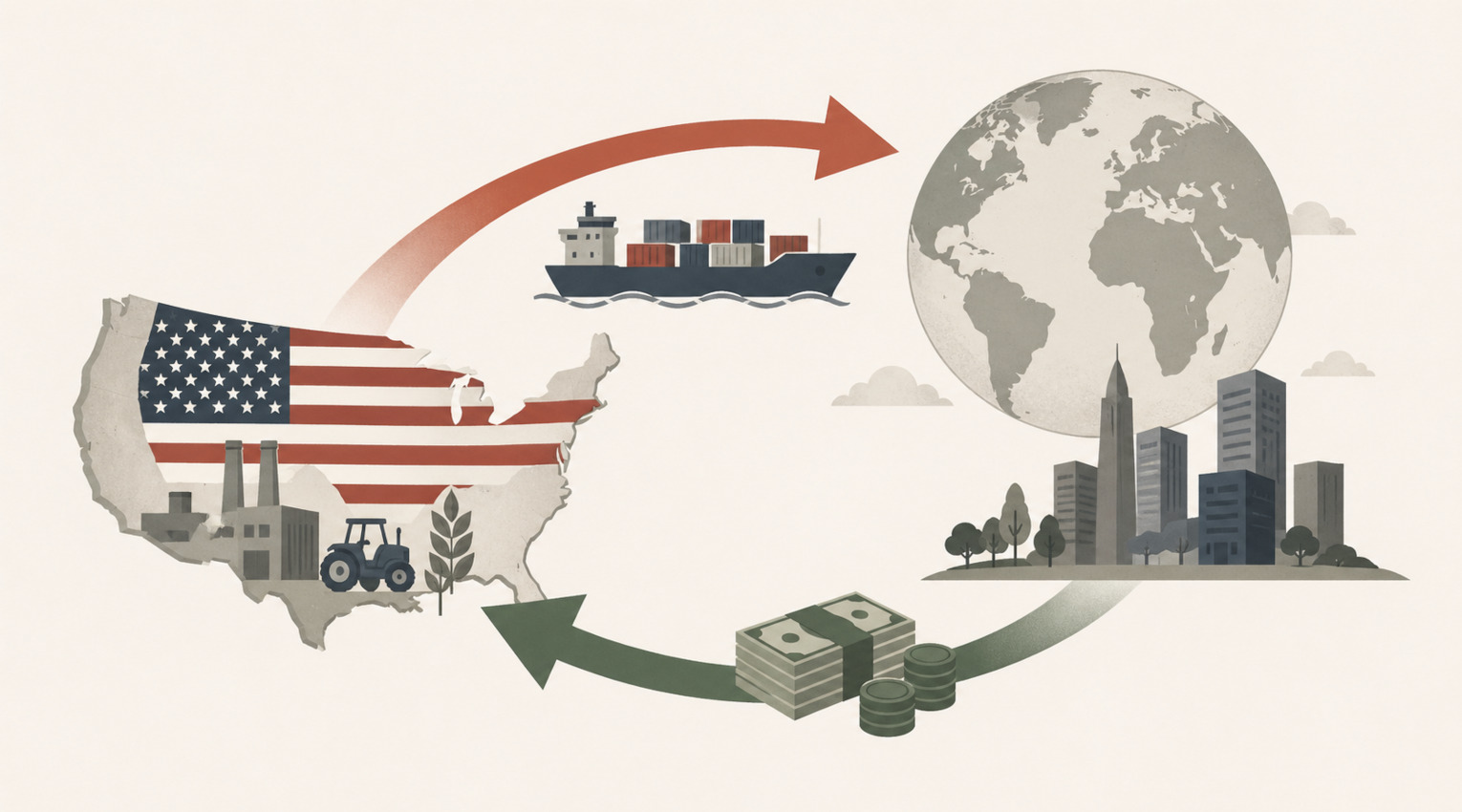
To help expand literacy about cross-border trade, let’s look at some excerpts from a new column in the Washington Post by Mark Perry and Don Boudreaux.
…deficits, Trump says, damage the U.S. economy and justify the imposition of emergency tariffs. …But if trade deficits drain wealth from a country, Americans’ average real net worth would have fallen over the past half-century. Instead, even after accounting for growing government debt, it has risen significantly. For every $100 billion increase in the trade deficit since 1975, U.S. household wealth has increased by an average of $76,000. …Household net worth is also 140 percent higher than it was when the North American Free Trade Agreement took effect in 1994, and 70 percent higher than when China joined the World Trade Organization in 2001.
Here are two charts from the article, which I’ve placed side by side, to illustrate how trade deficits have no negative relationship with wealth.
In fact, they are correlated with higher wealth.
Let’s review some more of the column.
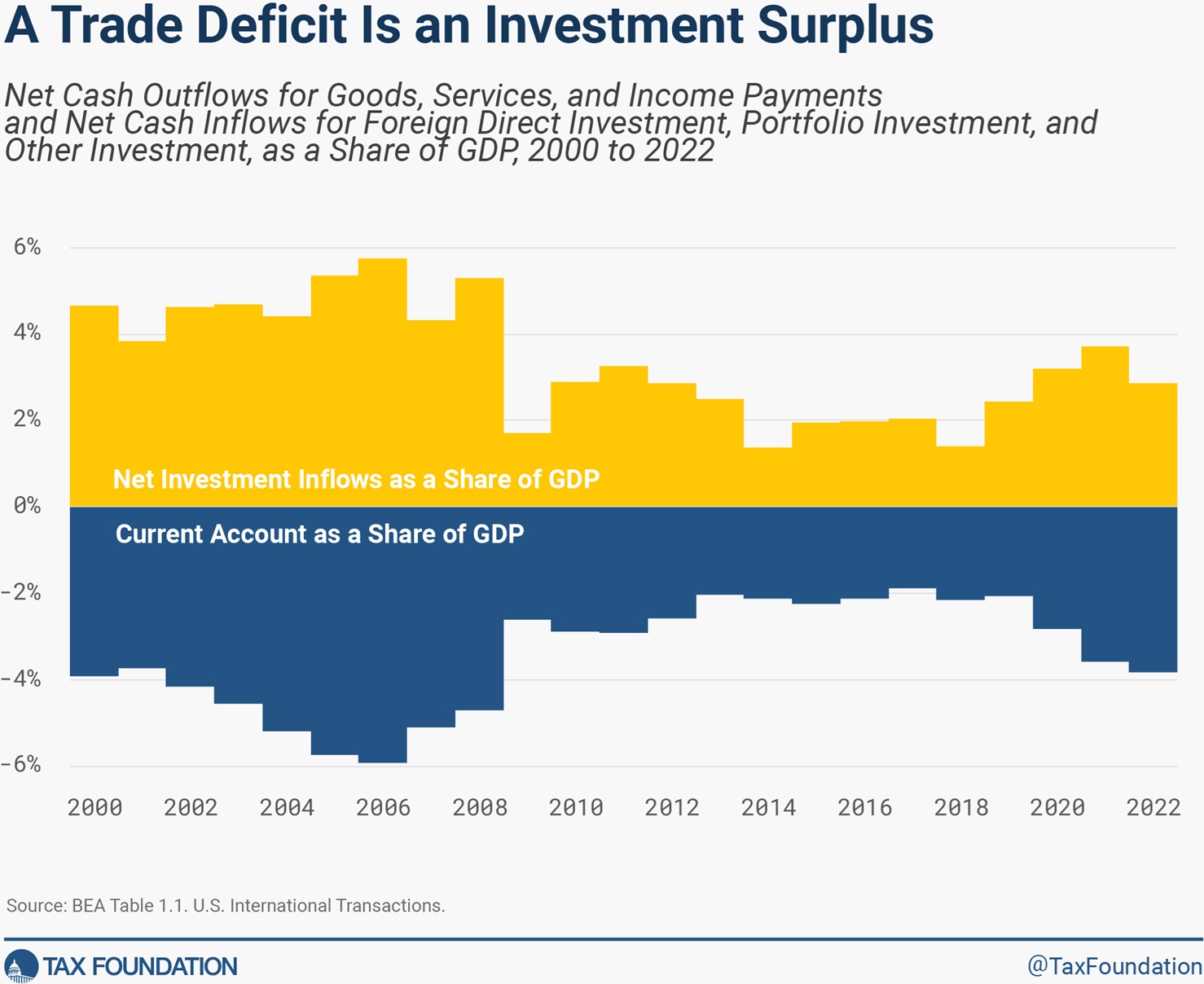
The two professors explain that the additional investment from overseas has been a big plus for America.
In other words, correlation is causation in this case.
U.S. trade deficits reflect rising investment in America…in exchange for their exports, foreigners received dollars to facilitate their access to America’s large, entrepreneurial and dynamic economy. The U.S. economy, with its secure property rights and rule of law, is something investors worldwide are eager to be part of. …This investment has given the U.S. more and better factories, expanded R&D, and raised wages through increased worker training. …Fifty years of trade deficits have not drained the United States of wealth or mortgaged its future to foreigners. Rather, by bringing trillions of dollars of foreign investment capital to the nation’s shores, they have enriched it. That’s an economic outcome to celebrate.
This does not mean, incidentally, that every American wins, especially in the short run.
An economy advances in part because of “creative destruction.” And that means that all commerce – whether inside borders or across borders – can hurt some people.
But we all wind up being richer in the long run. Which is exactly whatthedatashows (ask yourself if the descendants of candle makers would be better off if the light bulb had been banned).
*The only exception is that some foreigners, instead of investing in the productive sector of the American economy, buy U.S. government bonds and thus help to finance Washington’s bloated budget.