

While I periodically disagree with some of the magazine’s analysis (see here, here, and here), I enjoy perusing the Economist because it covers issues I care about.
A recent headline in the U.K.-based publication caught my attention. The world’s biggest problem, according to the article, supposedly is that people feel gloomy.

The article correctly explains that there are reasons to feel dour, but that’s not the focus of today’s column. Instead, I started thinking about what I think is the world’s main economic problem.
- A global outbreak of protectionism, triggered by Trump’s foolish policies?
- A global debt crisis, triggered by Italy, France, or the U.K. (or the U.S.!)?
- A new global pandemic, leading again to overreaction by governments?
- A war, triggered by something foolish in Ukraine or the South China Sea?
My two cents is that the answer is related to the second option.
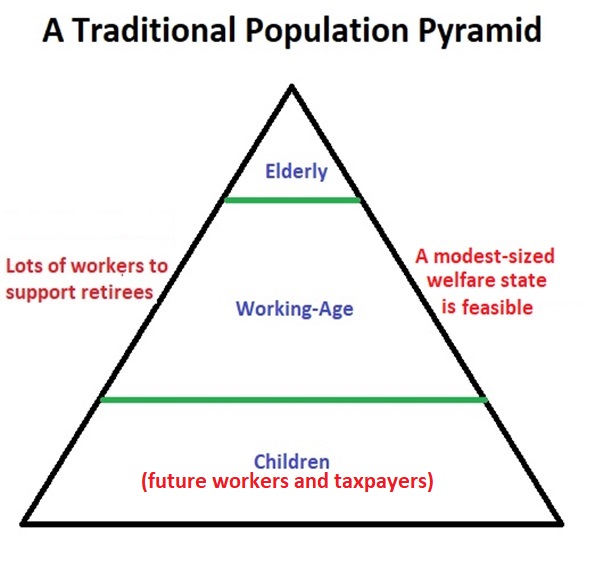
More specifically, I think poorly designed entitlement programs are the biggest economic problem.
Governments created tax-and-transfer programs in many nations based on the assumption that there would always be a population pyramid, meaning lots of young taxpayers to finance pensions and health care for old people.
But people are now living longer and having fewer kids. As such, the population pyramid in almost every developed nation is becoming a population cylinder.
That means ever-increasing fiscal pressure, oftentimes in nations that already suffer from excessive taxes and spending.
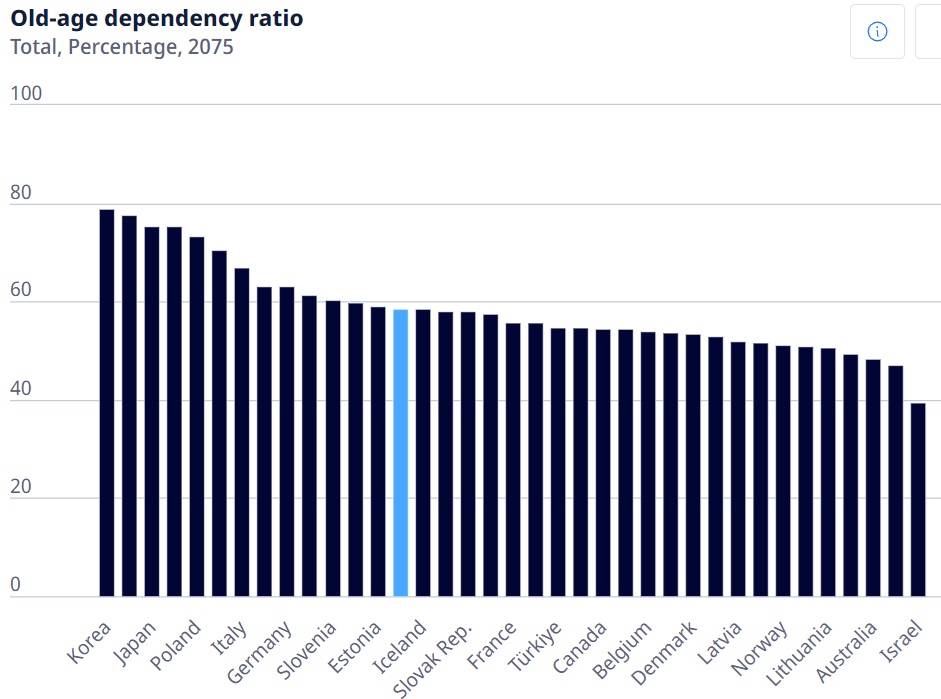
And this is the reason to worry. A big global fiscal crisis should be viewed as a symptom of this problem.
I have a five-part series on exactly this topic.
Pointing out that there is a problem is easy. Indeed, very few serious people think otherwise.
The hard part is convincing politicians to enact reforms that will avert future crises.
Very few nations are dealing with the problem of health entitlements. Yes, Switzerland seems to be characteristically sensible, but other nations either rely on rationing to control costs (goodbye, grandma) or they allow ever-larger spending burdens.
More nations have taken steps to control pension expenditures by shifting toward personal retirement accounts (examples include Australia, Chile, Switzerland, Hong Kong, Netherlands, the Faroe Islands, Denmark, Israel, and Sweden.
Sadly, the United States doesn’t seem primed to address problems with either Social Security or the health entitlements.
P.S. I listed war as a potential economic problem because – contrary to the foolish theories of Keynesian economists – massive death and destruction is not good for an economy.
P.P.S. Some people hope governments can avert future fiscal crises by subsidizing fertility. So far, the evidence shows that doesn’t work.