
There’s some amateur foreign-policy analysis in this video clip, but notice what I say about trends in Chinese economic policy.
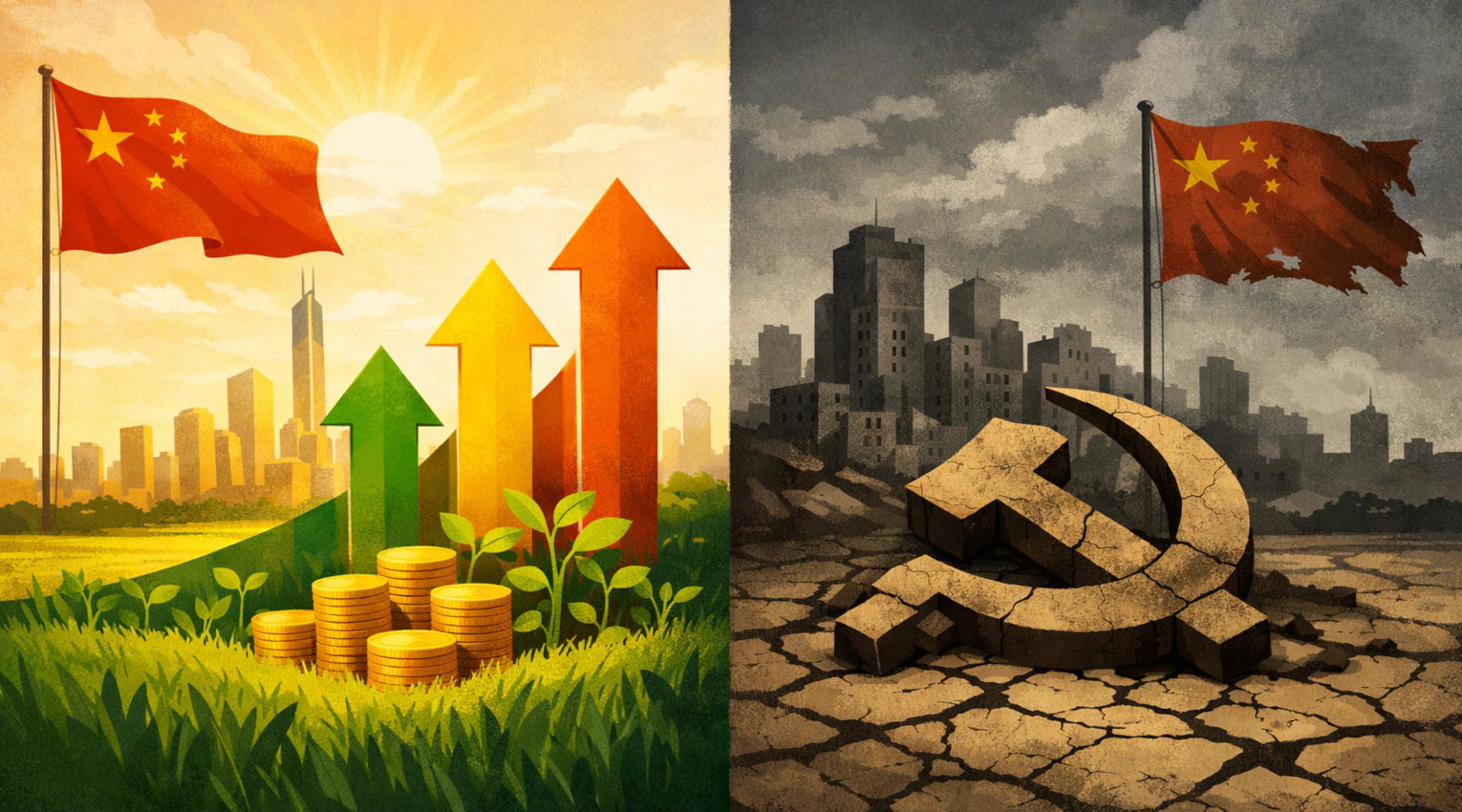
Today’s column is going to show that China’s economic improvement – indeed, its entire post World War II history – has a very simple explanation. And it can be summed up in four sentences.
- China was miserably poor under Maoist communism.
- China partially liberalized its economy starting about 40 years ago.
- China then started growing rapidly after those pro-market reforms.
- China will never become a rich country without more economic freedom.
But don’t believe anything simply because I wrote it. Let’s look at a couple of charts, starting with a look at China’s level of economic liberty since 1970.
According to the Fraser Institute’s Economic Freedom of the World, China’s score jumped from about 4 to 6 at the end of the 20th century, a 50 percent increase.

Notice that I augmented the chart by asking what we can deduce from China’s sudden economic improvement.
I finish the sentence in this next chart, courtesy of the Maddison database.
Lo and behold, the increase in economic freedom we saw above perfectly matches with China’s subsequent growth spurt.

Here’s a tweet making a very similar argument.

I’ll close with a depressing observation. China has not engaged in any meaningful additional liberalization over the last 20 years It may even be backsliding (see Part I and Part II).
I hope I’m wrong, but I’m not very optimistic about the future.