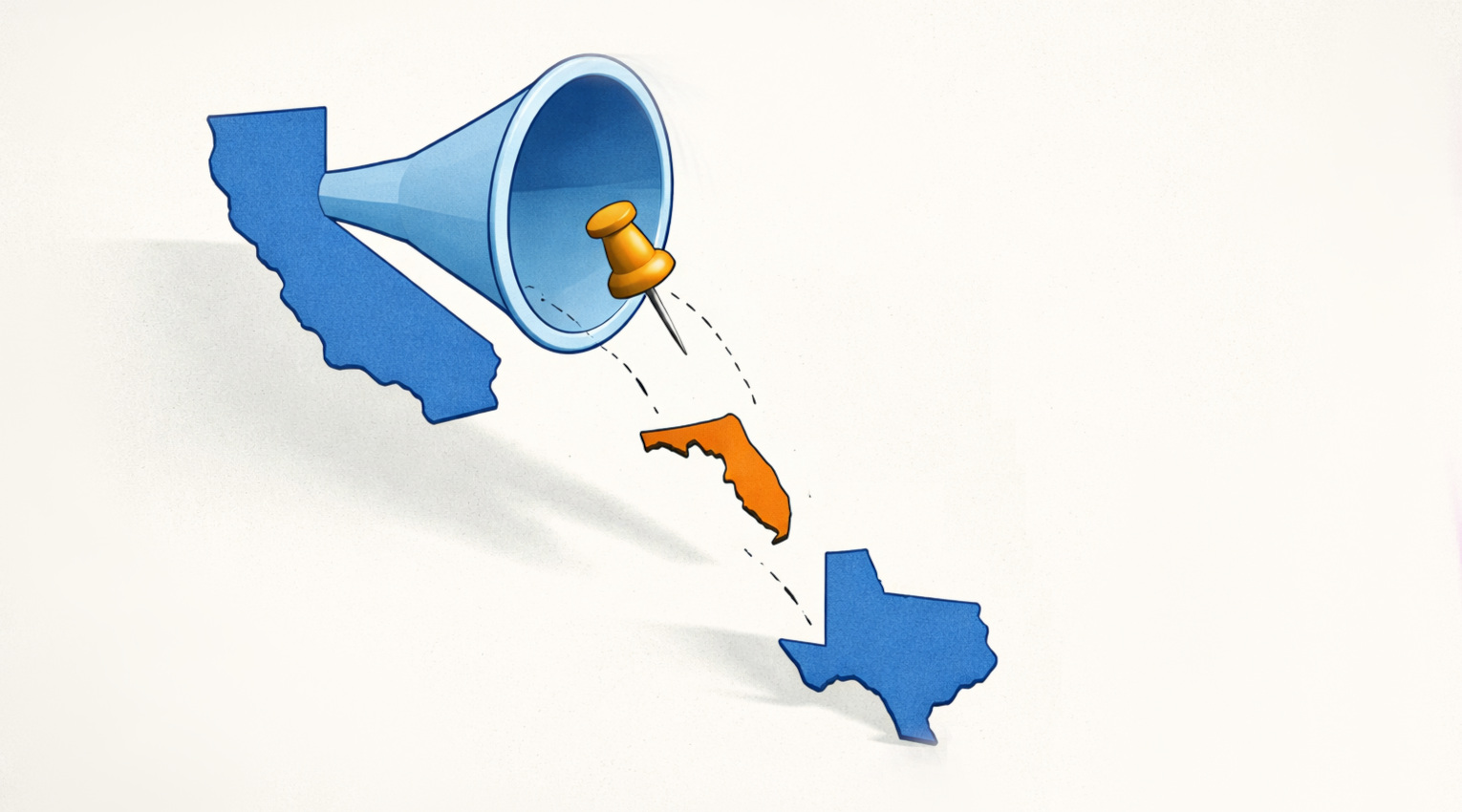
Well, when people move, they take their money with them.
Building on the evidence in Part I and Part II of this series, let’s begin today’s column by sharing a chart showing the latest data on how income has moved from high-tax states to low-tax states.
The chart comes from a recent Wall Street Journaleditorial.
Let’s look at some excerpts.
Even after the pandemic, high-tax states continue to lose tens of billions of dollars in taxable income to low-tax states. The latest IRS data includes the adjusted gross income (AGI) of tax filers who moved between and within states between 2022 and 2023. …states with the highest taxes continue to lose the most income to other states. California lost on net $11.9 billion, mostly to Texas, Nevada and Arizona. Other big losers include New York ($9.9 billion), Illinois ($6 billion), Massachusetts ($4 billion), New Jersey ($2.6 billion), Maryland ($1.8 billion) and Minnesota ($1.5 billion). …By comparison, all states without an income tax besides Alaska gained income from interstate migration, including Florida ($20.6 billion), Texas ($5.5 billion), Tennessee ($2.8 billion) and Nevada ($1.5 billion). Other big AGI gainers include South Carolina ($4.1 billion), North Carolina ($3.9 billion) and Arizona ($2.8 billion). Sunshine isn’t the only draw since zero-income tax New Hampshire, Wyoming and South Dakota also gained income, largely from higher-tax neighbors.
The editorial explains that many high-tax states are punishing the middle-class and upper-middle-class, not just rich people.
These states impose hefty progressive income taxes that wallop high earners, businesses and the upper middle class. While the top state-and-local rate in New York City is 14.8%, individuals who make over $215,400 pay a punishing 10.7%. Minnesota’s 9.85% top rate, which hits at $203,151, is the highest in the Midwest. …Millionaires in California pay a top rate of 13.3%, but the state’s 9.3% bracket begins at $72,724.
I also think the editorial’s conclusion makes a key point.
People move for reasons besides taxes, but taxes influence the economic climate and opportunity. Government unions that rule high-tax states also work to undermine the quality of public education and other services, while ballooning welfare states squeeze spending on public safety.
It’s not just that high-tax states pillage their residents. They also don’t do a good job of delivering basic services.
The core problem, as noted in the excerpt, is that unionized bureaucrats control the Democratic Party and use their power to get above-market compensation while being insulated from any accountability for delivering good (or even adequate) results.