Those bureaucracies are infamous for their reflexive advocacy of higher fiscal burdens.
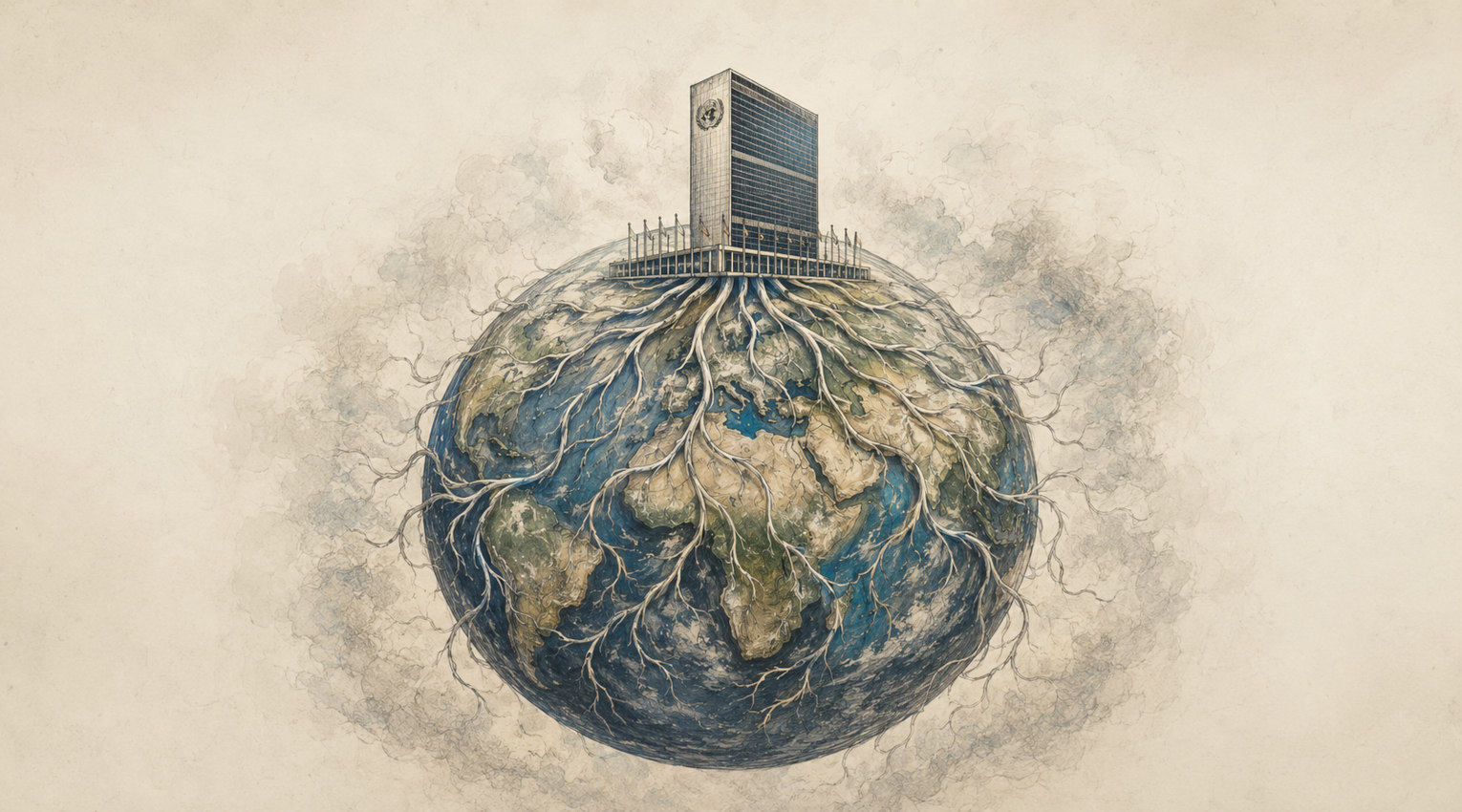
By contrast, I generally ignore the United Nations. Yes, it’s wasteful. Yes, it pushes awful ideas. But it’s also spectacularly incompetent, so its ability to do damage is trivial.
Let’s look at excerpts from two recent articles in the Wall Street Journal.
We’ll start with a column earlier this month by Brenda Shaffer. Here are some excerpts.
In the name of fighting climate change, the International Civil Aviation Organization, a specialized United Nations agency, in 2027 is set to require airlines to report their greenhouse-gas emissions for international flights and buy carbon credits to offset emissions. This mandatory expense will raise flight costs—and give an unelected global agency the power to tax an entire industrial sector without any democratic input from those being taxed. …Aviation accounts for only 2.5% of global greenhouse-gas emissions, and this policy will impose significant costs on the industry. It is also likely to favor larger aviation companies, putting budget airlines at a disadvantage. …The ICAO is neither a democratically elected government nor a regulated corporation. This policy would give an unelected, unregulated international bureaucracy significant control over businesses. …The lack of democratic objection to this taxation by a global institution is astounding.
Next, let’s look at some of what Kate Farmer wrote last month.
…the International Maritime Organization, the United Nations shipping agency…Net Zero Framework is an aggressive regulatory package designed to push global shipping to net-zero emissions around 2050. …The revenue the IMO generates—an estimated $10 billion to $12 billion a year—would go into a Net-Zero Fund to support U.N. climate-related goals such as mitigating “negative impacts on vulnerable States” and supporting “innovation . . . in developing countries.” …America’s commercial shipbuilding industry can’t afford to lose ground because of a global wealth-redistribution ploy. U.S.-flagged ships already cost more than four times as much to build and operate as international ones. Rising costs would push the industry into deeper decline and widen the gap with China, which has more than 200 times America’s shipbuilding capacity and builds more than 1,000 commercial ships annually to America’s five.
Taxes on flying and shipping may just be the appetizers.
The Guardian is a left-wing newspaper in the United Kingdom and there’s an article earlier this year celebrating the broader push global taxation written by Fiona Harvey and Heather Stewart. Here are some excerpts.
Negotiations on a planned global tax treaty will resume at the UN headquarters in New York… Progress on the tax treaty, which was first proposed by African countries in 2022, has been slow so far. The US has withdrawn from the talks, though this need not prevent other countries pressing ahead. …If it can be made to work, the treaty could be a big step forward… Inequality rates have soared in recent years, with the wealthiest 0.001% of the population – roughly 56,000 people – holding three times more wealth than the poorer 50%, and the disparity is growing. …if a large group of countries were to agree on minimum taxes on wealth it could help assuage such fears. An annual wealth tax of up to 5% on the ultra-rich would raise about $1.7tn a year.
I’ll close with the comment that I don’t like it when my local government wants to grab more of my money.
I’m even more unhappy when my state government wants to grab more of my money.
No wonder they are so oblivious to the economic hardship caused by higher fiscal burdens.
I’ll close with some uncharacteristic optimism.
This is an issue where Donald Trump has a good track record. He temporarily thwarted an earlier efforts for global taxes on shipping. He needs to do that again, and use American economic leverage to kill all U.N. global tax schemes.