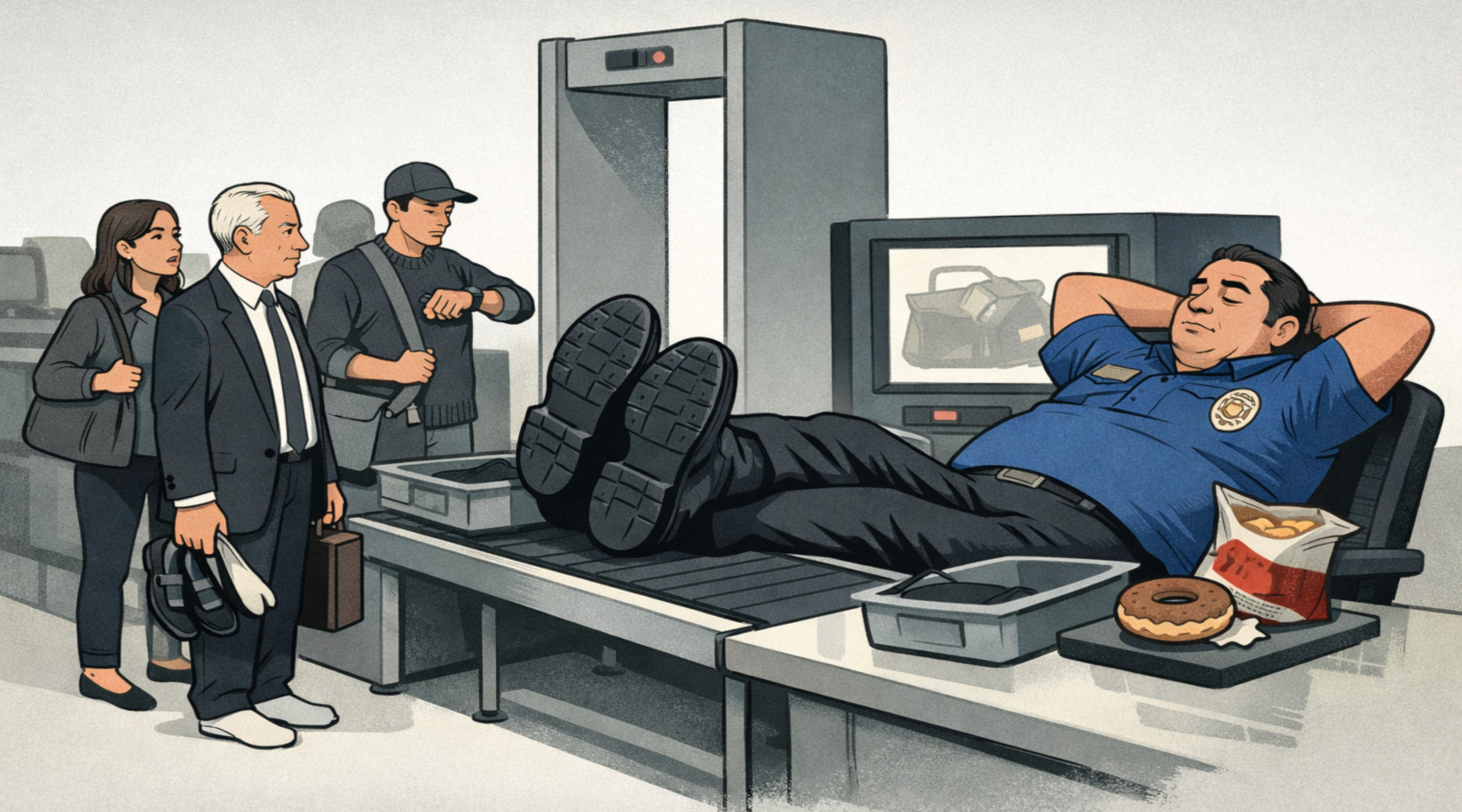
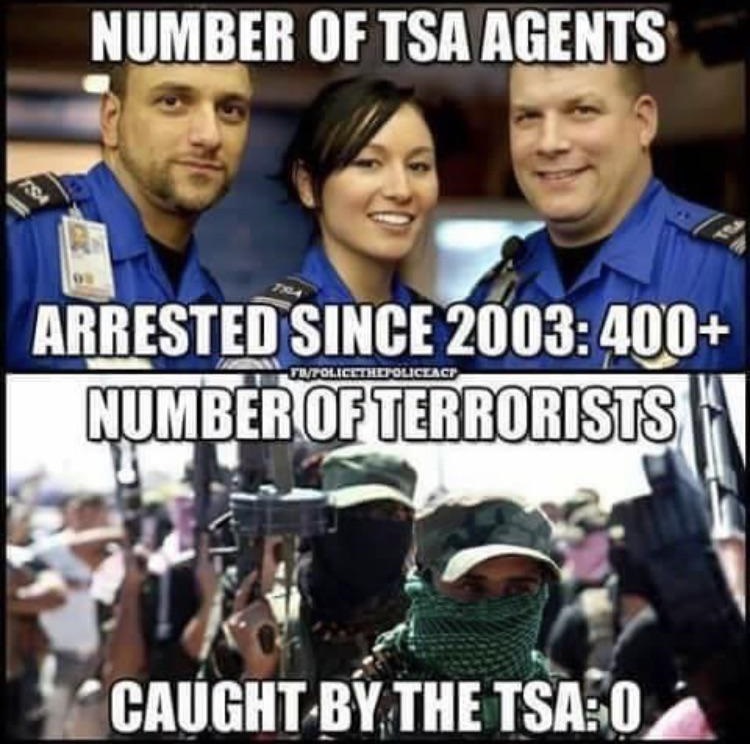
The worse news is that the pilot announced right before landing that there were three-hour delays to clear TSA security (Houston is one of the airports hardest hit by TSA bureaucrats calling in sick to protest not being paid while politicians in DC squabble over funding the Department of Homeland Security).
As an aside, I’ve always been irked by the nonsensical rule that you have to go back through security after landing on an international flight. So the fact that I was going to have to stand in line for three hours was especially irritating.
But now for some good news. For whatever reason, there was a separate TSA line for those of us coming from international arrivals. So I only had to stand in line for about one hour (which normally would get me upset, but I felt lucky compared to the people in the regular line).*
Anyhow, all of that is merely a preface to today’s column, which is yet another call to get the government out of the business of airport security (previous versions available here and here).
This is not a risky and untested idea. As the Washington Post recently noted in an editorial, there are several major airports that use private security. Here are some excerpts.
Currently 20 American airports use private contractors, not the Transportation Security Administration, to screen passengers. And those private contractors still get paid regardless of whether Congress passes legislation on time. The federal government’s Screening Partnership Program (SPP) allows airports to apply to use qualified private companies for passenger screening, rather than relying on unionized federal employees. TSA still gets to set all the regulations and standards for the private screeners. The agency just doesn’t do the screening itself. This is a much better way to do airport security. A government agency regulating itself creates conflicts of interest. …Major countries around the world follow this best practice. Canada, Britain, Germany, France and Spain use private contractors for passenger screening. …While most of the 20 airports with private screeners are small, one is San Francisco International Airport. Checkpoints have been running smoothly at the major hub. Another is Kansas City International Airport. “Our screeners are still getting paid,” a Kansas City Aviation Department spokesman told local media. …Having a government monopoly in charge of passenger screening subjects air travelers to political dysfunction in a completely unnecessary way.
Here’s the list of the larger airports with private security screeners.
I have flown through San Francisco many times on trips to Asia and the Antipodes and have always been impressed by the comparative painlessness of those experiences.
*For unknown reasons, those of us in the “short” line did not have to show an ID and boarding pass. I don’t know if this was a one-time bureaucratic screw-up or a permanent change, but I was grateful to avoid that bit of needless security theater.