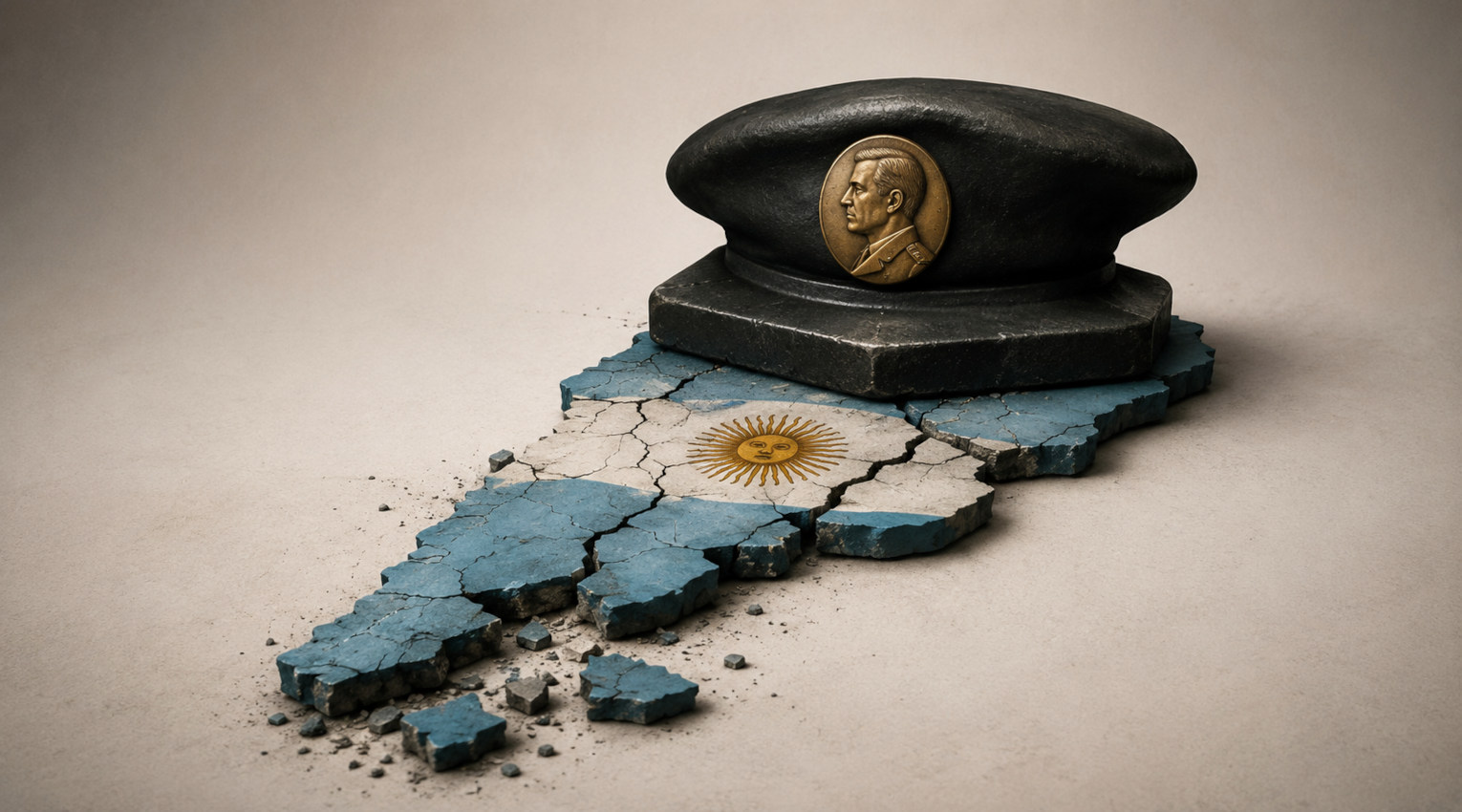
There were some utterly reprehensible heads of state in the 20th century, with Stalin, Mao, Hitler. and Pol Pot surely being among the worst of the worst.
But what if we remove mass-murdering dictators from the list and look at democratically elected politicians. Who would win the prize for doing the most damage to a country?
I’m tempted to be American-centric and pick someone like Woodrow Wilson or FDR, but I think Argentina’s Juan Perón did far more long-run damage to his country.
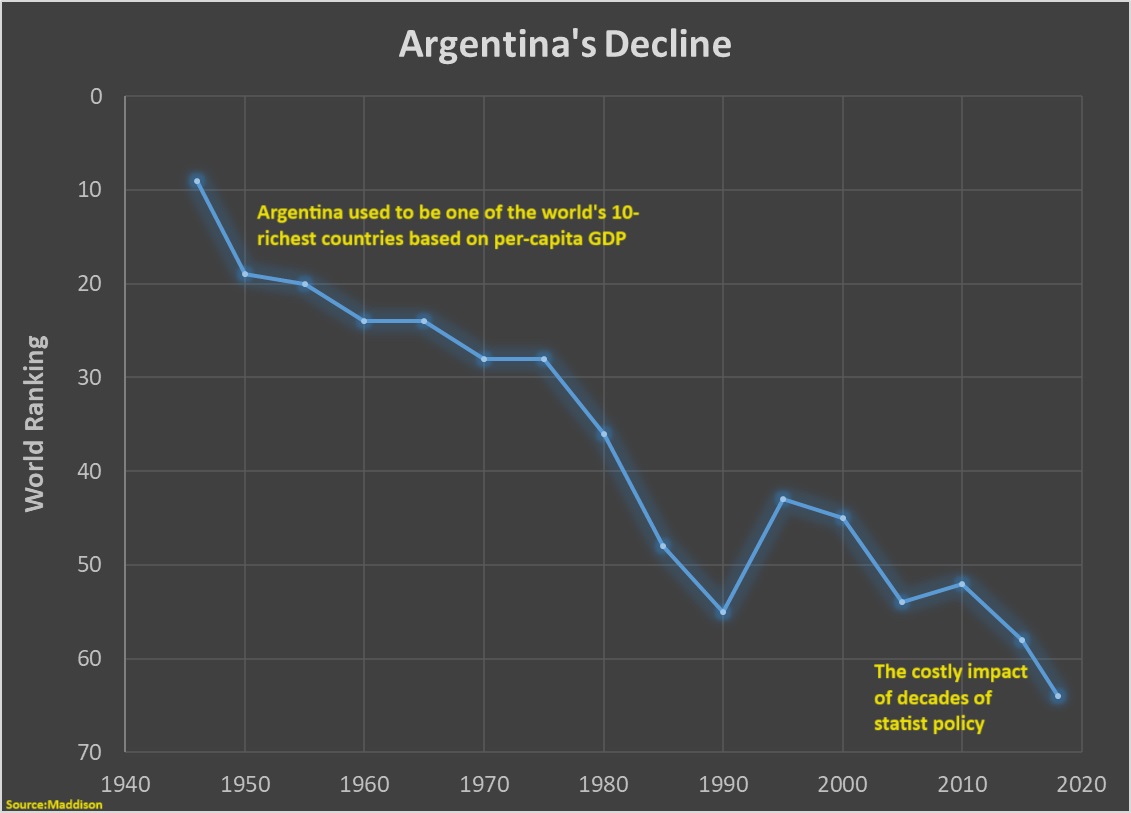
Indeed, Perónism did so much damage that Argentina was ranked as being the world’s worst-performing economy over a 100-year period.
For today’s column, let’s summarize Perón’s awful policies. And the best place to start is an article by Marcos Falcone in the Independent Review.
Here are some excerpts. He starts by summarizing Argentina’s period of prosperity.
…by the early twentieth century Argentina was seen as an advanced country to which millions of migrants moved. In just forty years, Argentina’s population had multiplied by four, trade flows by twelve… As millions of immigrants came, critics complained that Argentine salaries were merely equivalent to those of Germany and only higher than most of Europe, with the exception of England… Before the Great Depression, Argentina was growing faster than the United States, Canada, and Australia… To be riche comme un Argentin (as rich as an Argentine) was a compliment among the French.
But then Perón came to power and quickly expanded the size and scope of government.
From the moment Perón institutionalized his thinking into a party, Argentine politics would never be the same. Indeed, the PJ would govern not just from 1946 to 1955 (as the Partido Peronista), but then again from 1973 to 1976, 1989 to 1999, 2002 to 2015, and 2019 to 2023. …Perón and his party sought to (and effectively did) create a nationalist authoritarian state. In terms of nationalism, he decided to confiscate several foreign-owned businesses, such as railway and phone companies, and he created state-owned industrial companies. His government also nationalized foreign trade, thus appropriating landowners’ resources. …Perón’s goal was to build a corporatist welfare system; therefore, he did not just empower organized labor but also placed the state as a legal referee in all negotiations between union leaders and businesses. Corporatism had been gaining ground from the 1930s, but it was Perón who institutionalized state-regulated interactions between private actors. …Perón also vastly increased public spending, thereby running extensive fiscal deficits. He also implemented currency controls and offered negative interest rates in real terms… In the first three years of the Perón administration, public spending increased by 60 percent…, which meant it had risen to 45 percent of GDP by 1949… inflation quickly became a problem, particularly as fiscal revenue fell and it became clear to everyone that wealth was at the government’s disposal, which virtually eliminated productive private investment. …there was no GDP per capita growth between 1947 and 1955…and the result was an inflationary crisis and a recession.
The economy became such as mess that there was a military coup and Perón lived in exile.
But his policies remained. People and businesses had been lured into dependency because of handouts, protectionism, subsidies, etc, with the net result that Argentina was a corporatist economy. Or, as the author explains, a fascist economy.
In terms of economics, an answer to the question of what is wrong with Peronism should point to the fact that it does not work for the people and, more important, that it has been the deciding factor that has triggered the country’s economic decline. …The main goal of this essay has been to bring the political, economic, and cultural aspects of fascism together to explain Argentina’s economic decline. The explanation is not just corporatism, the welfare state, an unbalanced budget, a cult of personality, or even authoritarianism: It is a unique combination of all of these elements that Peronism, the Argentine variant of fascism, has imposed upon the country.
A 2015 article in Forbes made similar points about the awful impact of Peronism.
He was president three times: from 1946 – 1951, 1952 – 1955, and 1973 – 1974. Of the three presidencies, Perón’s first was the most relevant in terms of the fundamental changes to the Argentine economy and society that resulted from his governmental actions. Yet a significant portion of the funding of his economic reforms and social programs was concealed from the Argentine people. Today, almost 70 years from the first systematic inflationary policies implemented by Perón and after four changes in Argentina’s currency, inflation and concealment are still alive. …fascist corporatism…aims at organizing society into corporations or associations of persons with a common economic interest that are subordinated to the state. …A cornerstone of fascism is economic nationalism. …the government usually restricts foreign imports… Perón engaged in a massive program of expenditures aimed at nationalizing industries and public services, extending health and welfare benefits… The nationalist economic view of Perón’s government manifested itself as well in the 1949 reform of the constitution, which assigned to the state direct control over foreign trade, ownership of all minerals and energy resources, and ownership of public service enterprises. …Lastly, Perón had absolute control over the central bank and therefore the opportunity to create money to fund government deficits. In this way, Perón institutionalized fraud in Argentina as his government used the central bank, an institution created by law, to expand money supply, generate inflation, and thereby steal resources from the private sector of the economy.
Let’s cite one more study, this one authored by two Argentinian academics, Carlos Newland and Emilio Ocampo
This paper summarizes the key tenets of Peron’s economic ideas, which have guided his economic policies and those of his successors since 1946: emphasis on industrialization, trade and financial autarchy, and active State planning and intervention, particularly in the allocation of credit and the distribution of income among factors of production. These policies had a persistent, decisive and negative impact on the evolution of the Argentine economy. Peronism introduced path-dependence on inflation, deficit and stagnation. …According to New York Times columnist Roger Cohen… “Argentina invented its own political philosophy: a strange mishmash of nationalism, romanticism, fascism, socialism, backwardness, progressiveness, militarism, eroticism, fantasy, musical, mournfulness, irresponsibility and repression. The name it gave all this was Peronism. It has proved impossible to shake”. …Although it recognized the Marxist notion of class struggle, as in Mussolini’s fascism, it rejected the annihilation of the private sector proposed by communism. Instead, it proposed that the Government (Perón), the State (public officials) and the “organized community” would determine a fair distribution of income among workers and businessmen. Basically government had to regulate market forces when demand or consumption exceeded supply by imposing price control or rationing. …Between 1946 and 1955 Perón closed the economy to foreign competition and intensified state intervention. The measures he took during his presidency included the nationalization of the railways and utilities, as well as some industrial and shipping companies. In the banking sector, he eliminated Central Bank independence, created new public financial institutions to finance industrial development, allocated credit on a discretionary basis to benefit mostly the urban industrial sector and nationalized deposits as well as mortgage credit. Foreign trade was put under the control of IAPI, a state monopoly which was presided by the president of the Central Bank. The Peronist regime also increased government bureaucracy. Between 1943 and 1955, the number of public employees doubled while population grew by only 25%. Public expenditures grew 60% between 1946 and 1955. Compared with the rest of Latin America, by the end of the period Argentina had the largest public sector.
As already noted, most of these terrible policies were continued after Perón was forced out of office.
Indeed, they largely remained (and, in many cases, were made worse) all the way until Javier Milei’s election in late 2023.
I’ll close by sharing this tweet, which accurately summarizes what is wrong with Peronism.
By the way, I don’t know the source for the “8 times greater” claim. So that may be an exaggeration.
But the Maddison data definitely show Argentina being close to Switzerland after World War II and then falling far behind over the next several decades.