
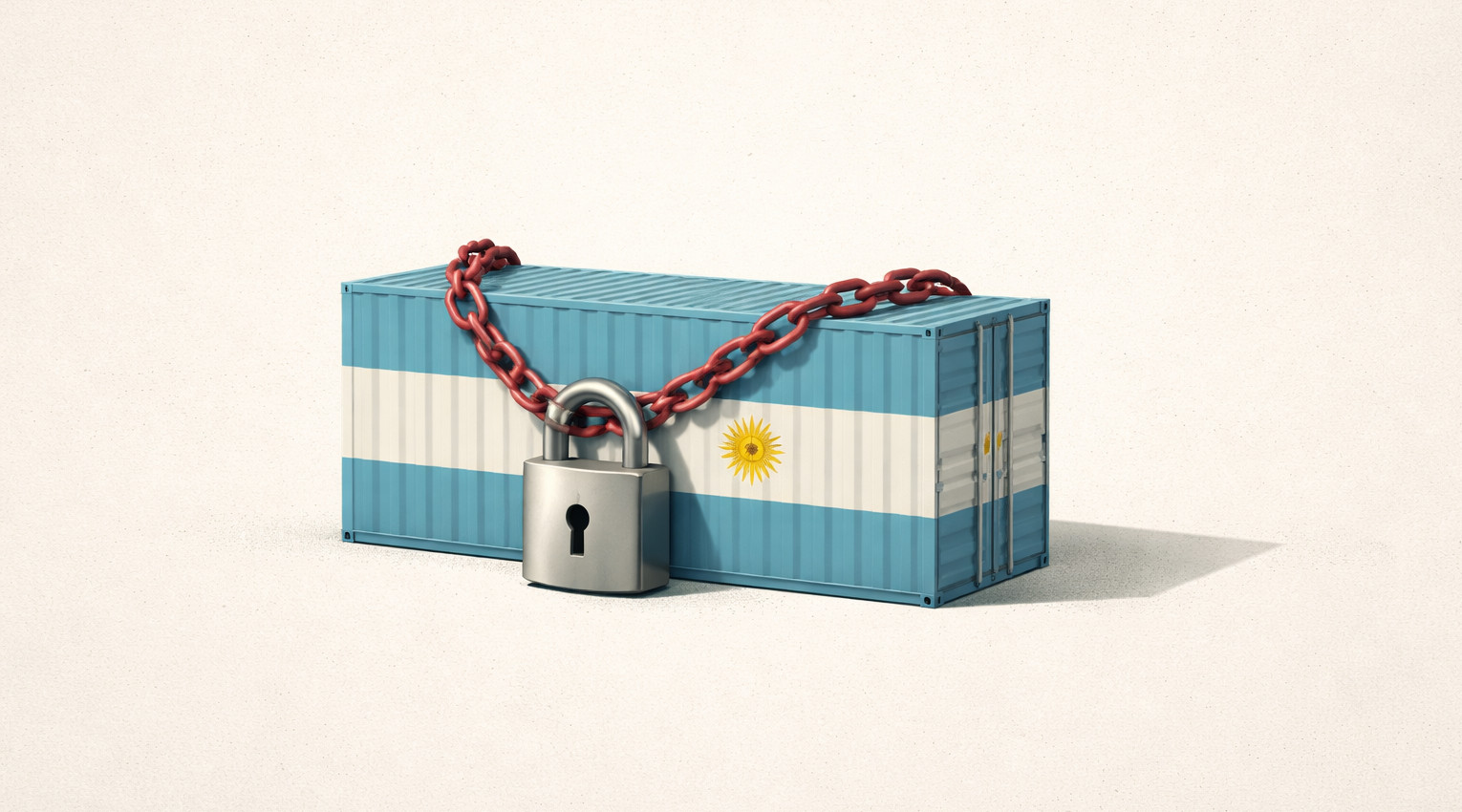
Last year, as part of a series on the additional reforms Milei needs to enact in Argentina, I shared this video on reducing protectionism.
Since the video was only one-minute long, there was no chance to provide details.
But at the conference in Buenos Aires this week, Professor Jorge Streb shared some fascinating details on the history of trade policy in Argentina.
We’ll start with the bad news. Here’s a slide documenting the nation’s major episodes of protectionism.

Unfortunately, there’s more bad news.
Here’s a slide showing the various ways that Argentinian politicians have interfered with exchange rates, which are important for trade.

The previous two slides were the bad news.
But Professor Streb also noted that there have been periods of economic liberalization.
Here a list of when trade was liberalized.

And here are periods when government intervention in exchange rates was eased.

To give you an idea of how trade policy has gyrated, here are trade scores for Argentina and Hong Kong from 1970-2023.
As you can see, Hong Kong as been consistently very good while Argentina has oscillated between bad and very bad.

Now let’s shift from Argentinian trade history to Javier Milei.
The first thing to understand is that Argentina is a member of Mercosur, a trade bloc with Brazil, Paraguay, and Uruguay. And Mercosur operates like the European Union, meaning free trade among members but trade barriers with the rest of the world.
The bottom line is that Argentina (and other member nations) are constrained by the common Mercosur rules.
But that doesn’t mean Milei is unable to make any improvements. Here’s a list from Professor Streb’s presentation.

I’ll close by sharing one slide from a presentation from the Argentine Agency for the Promotion of Investment and International Trade.
As you can see, there is great optimism that Milei’s overall agenda is making the country much more attractive for the globe’s investors.

P.S. Some free market people think Argentina should pull out of Mercosur and adopt a policy of unilateral free trade, an approach some nations have successfully adopted. Chile is not a member of Mercosur, for instance, having opted for unilateral liberalization. It’s worth noting that it has now become the region’s richest nation.