
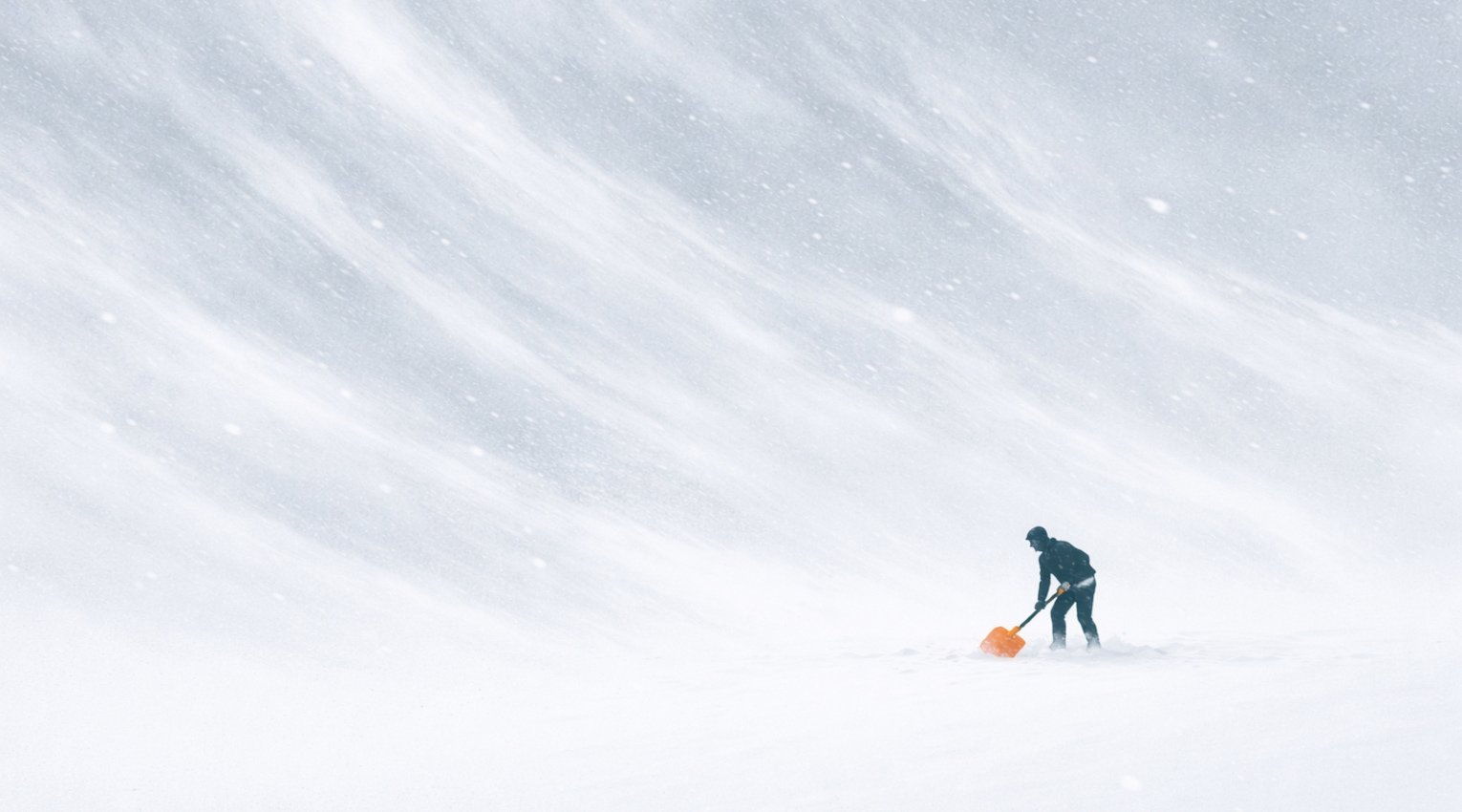
I’ve spent significant parts of the last two days shoveling snow, which has me thinking about entropy.
Much of our time, energy, and economic activity is dedicated to combating entropy, or disorder. We tidy things up, nature moves it all around, and then we do it over again.
We can see this fight against entropy everywhere in our daily lives. Parents, for instance, know the struggle of returning order to a room visited by an energetic child. Homeowners especially understand the constant fight against the forces of entropy—of the never ending cycle of maintaining, fixing, replacing, or upgrading everything in and around a house. Much of that time is spent dealing with one of entropies favorite instruments: water. We fill our homes with equipment to move it where we need it, build barriers to keep it from where we don’t want it, and at great cost repair the damage when we inevitably fail.
Entire industries exist to aid and assist the domestic war on entropy. Landscapers, pressure washers, contractors, plumbers, roofers, on and on it goes. We grab our plot of land, fix it up nice, and fight like hell against the forces of nature to keep it that way. We heat it when it’s cold, cool it when it’s hot, bring light when it is dark, and block it out when it’s bright.
All of civilization is more or less the same story. Man long ago looked out at the natural world and said, “we can make this better.” We tame, plow, sow, harvest, irrigate, fertilize, mine, dam, dredge, excavate, drill, fence, pave, and we build, build, build.
At every stage, as we conquered one challenge, we’d learn, iterate, improve efficiency, and eventually we got so good at it that it freed enough time and energy to look for the next challenge. We piled victory upon victory against the forces of nature until it became easy for many to forget there was a war at all. Americans, in particular, live on average in extreme comfort, the day to day fight against entropy present but routinized. And when the fight gets tough we have ample aforementioned industry allies to call upon.
But entropy is never truly defeated, our victory never quite total. All it takes is a bit of neglect and time and then nature will return in force. Abandoned gardens will turn wild, streets will crack, homes will decay.
Entropy, moreover, is more than just a domestic challenge or a battle against nature. Disorder threatens us socially and politically as well. Just as we civilized the physical world, so did we eventually civilize ourselves.
We tamed our social and political world with institutions large and small, governmental and private, religious and secular. These institutions are the core of our defense against the entropy of social disorder. And boy have we neglected them.
If eternal vigilance is the price of liberty, then we are presently asleep. We have allowed our institutions to be hijacked by those who use them for the advancement of their personal or political agendas at the expense of the institutional mission. The cost has been a rapid decline in institutional trust and, in turn, growing social and political disorder.
With social norms eroding and having torn down many political norms for the expediency of punishing our political enemies, we find ourselves facing great social and political challenges without the proper tools to address them. Many of those tools were imprudently bent to another purpose and we have failed to fix or replace them.
We have journalists who think media exists for advancing partisan agendas, pastors who spread one message from the pulpit and the opposite on Twitter, universities that value ideological conformity over knowledge, scientists that chase grant dollars instead of truth, and elected officials who think their first responsibility is TV punditry.
When you park in your garden and defecate in your sinks, don’t be surprised when nothing grows and the plumbing doesn’t work.
Pretty much everyone understands that in the aftermath of a snowstorm, you pick up a shovel. Fewer grasp the importance of faith and trust in our institutions for fighting social entropy, and even fewer still the role that the selfish bending of institutions to personal whims plays in undermining that effort.
As we witness the social and political entropy around us, let us not despair. The tools we need have already been invented; we just need to take better care of them.