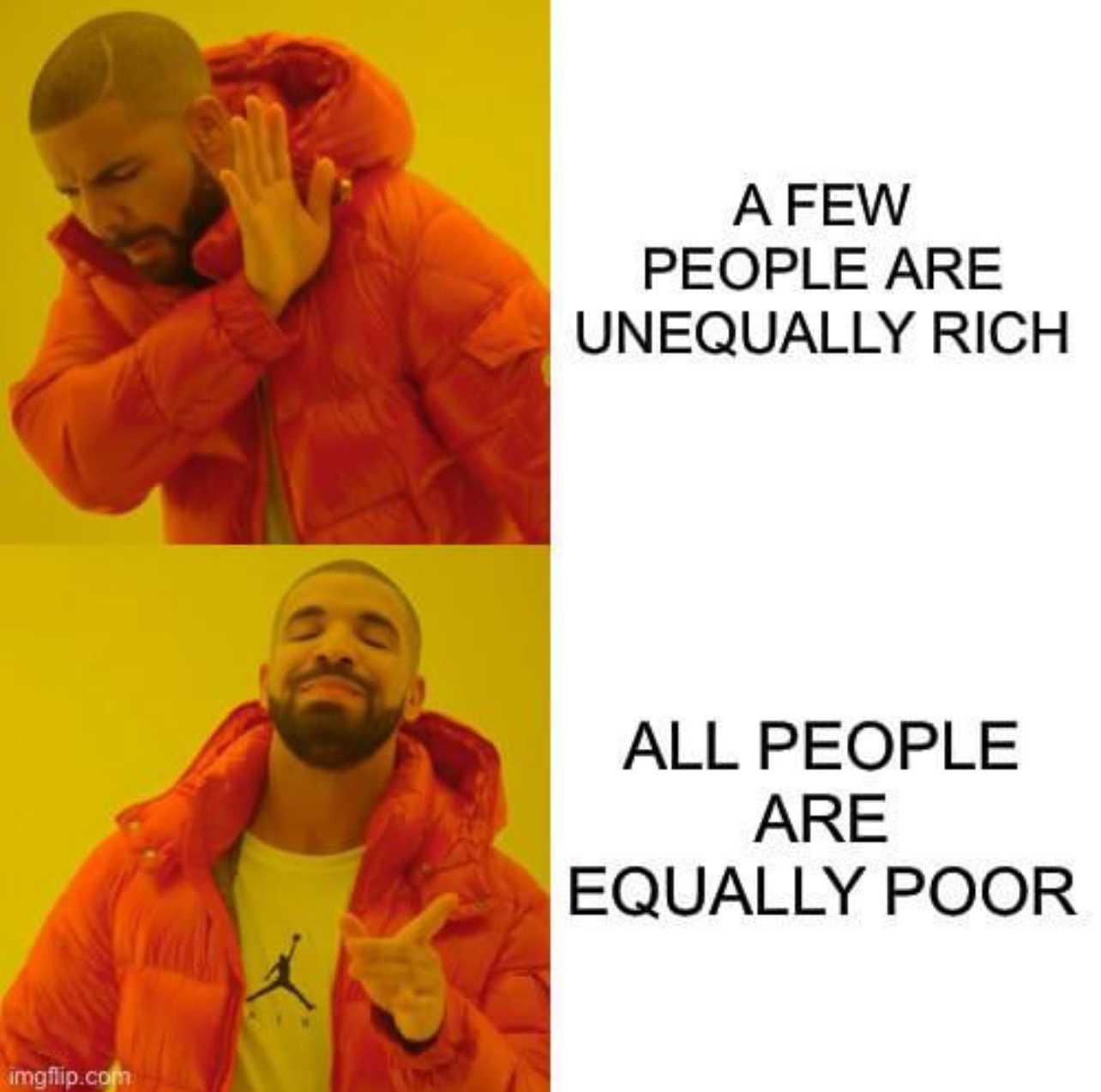
Given the relative economic weakness that plagues most European nations (documented here, here, here, here, and here), a top priority for policy makers should be to improve incentives for wealth creation.
But that assumes politicians care about the prosperity of citizens.
Based on a new report from the European Commission, the answer is no.
Instead of recommendations for lower tax rates on productive behavior, the bureaucrats basically produced an instruction manual for the imposition of various taxes that discourage saving and investment.
I’m not joking. Here are some excerpts.
The report is set against a backdrop of rising concern about the distribution of wealth in Europe, the erosion of taxes on wealth and wealth transfers over recent decades, and renewed fiscal needs in the wake of multiple crises. …These patterns underscore the broader economic context for the present study: wealth concentration is becoming a structural feature of the European economic landscape, raising questions about how existing tax frameworks can ensure fairness. …This includes an analysis of how such instruments can contribute to revenue mobilisation and a fairer distribution of the tax burden… The study does not advocate a specific reform blueprint, but rather identifies the conditions under which wealth-related taxes can be made more effective and equitable in EU Member States. …Overall, country experiences show that net wealth taxes can support revenue mobilisation and progressivity… there is scope for making better use of wealth-related tax instruments…in the EU.
What’s wrong with this analysis?
I don’t need to explain, because Sven Larson has already summarized the flaws in an article for the European Conservative.
Here are a few of the key points he made.
The report favors a slew of new taxes on Europe’s richest: a tax on capital gains, both realized and unrealized; a broad-based, ‘avoidance proof’ tax on inheritance and gifts; and a tax on capital migration. If matched with heavy taxation on equity-based income, these hate-the-rich taxes would work as a confiscatory machine, vacuuming Europe clean of anything that resembles economic success. …the problem with wealth stratification that the EU Commission now wants to address has nothing to do with wealth stratification at all. Its root cause is in the factors that keep the European economy trapped in stagnation:
High taxes that discourage entrepreneurship and labor career development;
Welfare state programs that encourage people to work less and to stay in lower-paying jobs; and
Regulations that stifle innovation, business development, and risk-taking.
You would think that the EU Commission, or at least its 21 experts who wrote this report on how to tax away wealth differences, would have enough economic scholarship among them to connect these dots. Sadly, they don’t. …If this hate-the-rich tax package became reality, it would kill whatever is left of growth spirit in the European economy. If the EU Commission got the powers to levy the taxes listed above, the consequences for the EU economy would be outright destructive.
Just in case you think Sven is engaging in hyperbole, remember two points.
First, every economic theory agrees that capital formation (i.e., saving and investment) is key for innovation and entrepreneurship. Thus meaning lower productivity and lower long-run growth.
Second, the bureaucrats in Brussels are suggesting that governments make death taxes, capital gains taxes, and wealth taxes more onerous – all of which will exacerbate the bias against capital formation.