Elon Musk’s Deparment of Goverment Efficiency (DOGE) didn’t achieve much, which is understandable since it didn’t have any real power or authority.
Moreover, given Trump’s unwillingness to deal with the massive long-run problems for programs such as Social Security and Medicare, DOGE was effectively precluded from making suggestions for genuine entitlement reform.
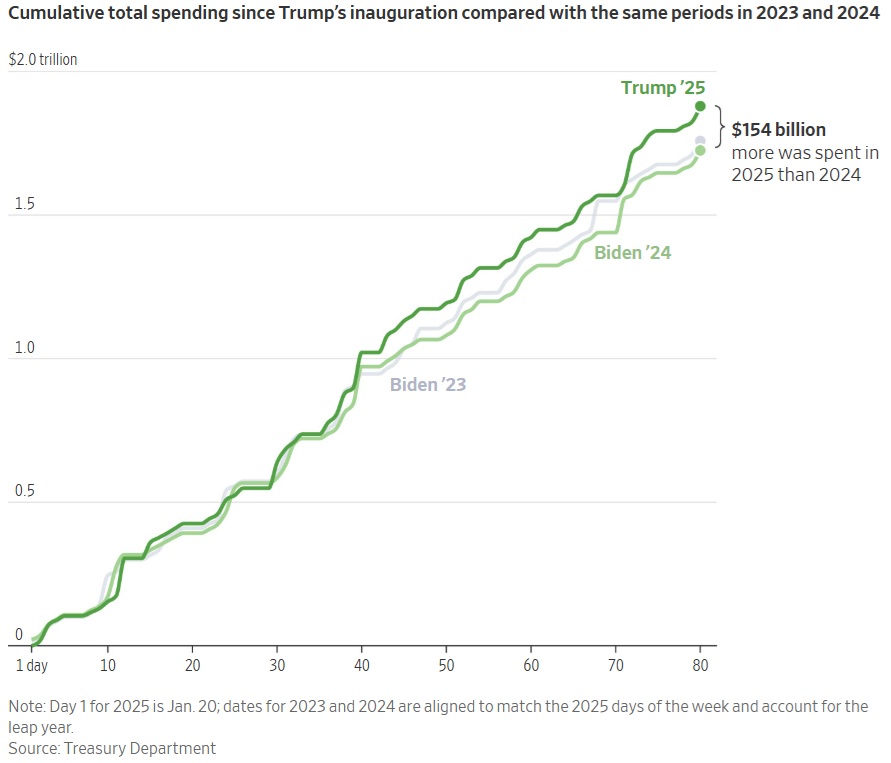
So it’s hardly a surprise that the U.S. government is still stumbling in the wrong direction.
But DOGE nonetheless provided value by highlighting counter-productive spending (and I wish it had gone after more targets, as explained here, here, here, here, and here).
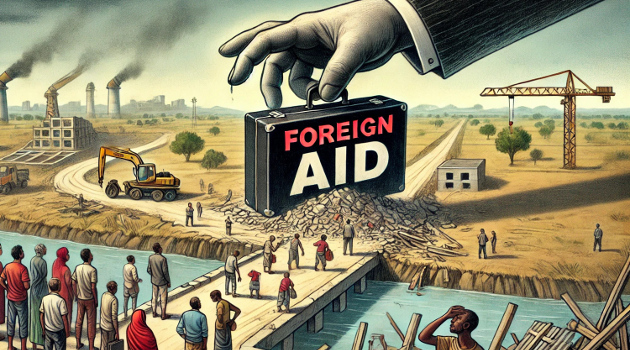
That being said, it probably did result in an actual reduction in foreign-aid spending by the U.S. Agency for International Development (USAID).
Consider, for example, a recent column in New York Times by Nicholas Kristof. He wants readers to think that Elon Musk is responsible for unnecessary deaths.
Here are some excerpts.
A Boston University researcher estimated that the aid cuts have cost more than 750,000 lives worldwide. A study published in the Lancet, the British medical journal, forecast that at present rates, the aid defunding will cost 9.4 million lives by 2030. These figures may not be accurate; we just don’t have solid mortality data, and the aid cuts have also reduced data collection. What I can say after visiting numerous impoverished villages is that aid cuts are unquestionably costing the lives of many children. …Until Trump’s second term, American aid cost just 23 cents for every $100 of gross national income and saved a life approximately once every 10 seconds. Seems like a bargain to me. …It’s reasonable to ask how much we should spend or how we should reform the system. But why would anyone begrudge $2 bed nets or $4 malaria vaccines to save children’s lives? So let me offer a challenge to Musk: Come with me on a reporting trip to South Sudan or Somalia or Mozambique. Meet starving children whose lives can be easily saved. Hold them. Look into their eyes. Talk to their terrified moms.
I have a couple of thoughts on this controversy.
First, I don’t necessarily trust the numbers being put forth by advocates of foreign aid.
Consider this data from South Africa, which conflicts with the numbers shared by Nicholas Kristof.
For purposes of today’s column, however, I’m going to accept the premise that USAID cuts do lead to preventable deaths. In part because I think it’s true (though probably greatly exaggerated), and in part because this raises some important issues that should be addressed.
I’ll start with this tweet, which was my late-night response to a tweet from my former colleague, Jessica Riedl.
For today’s column, I want to be more methodical.
And I’ll start with some of the numbers from Mr. Kristof’s column. He wrote that “American aid cost just 23 cents for every $100 of gross national income and saved a life approximately once every 10 seconds.”
Assuming he was using 2025 numbers, GDP was about $30.8 trillion, which implies that one life was saved for every $22.4 thousand allocated to foreign aid. Assuming you believe his numbers, of course.
I’m skeptical, but my approach today (as I already wrote) is to accept these numbers because I want to make a bigger point.
If it is true that a preventable death is averted for every $22.4 thousand of aid spending, and if this makes Elon Musk somehow responsible for thousands and thousands of unnecessary deaths, then what about Ivy League Universities, who collectively are sitting on endowments approaching $200 billion.
Are Harvard, Yale, et al, causing hundreds of thousands of deaths by not liquidating those funds and donating to charities for poor nations?
Or what about Jeff Bezos’ ex-wife, MacKenzie Scott, who has donated more than $26 billion to mostly left-leaning non-profits over the past few years. Is she guilty of causing deaths in poor nations because she didn’t direct all the money to fighting malaria or providing vaccines?
Some folks on Twitter/X have singled out former President Barack Obama.
How many lives could have been saved if he didn’t buy multiple mansions and instead donated the money to help poor nations?
Someone else made the same point about his $850 million presidential library.
I’ll close by stating that Elon Musk isn’t responsible for needless deaths in developing nations. And neither are Ivy League universities, MacKenzie Scott, or Barack Obama.
I’ll even give a free pass to my left-leaning friends, who could be liquidating their six-figure and seven-figure 401(k)s and other investments in order to save poor children in poor nations.
That’s because the real villains are the bad and incompetent governments in those countries. Here’s a map from the Fraser Institute’s Economic Freedom of the World. Every orange-colored nation has very bad economic policy and every red-colored country has utterly terrible economic policy.