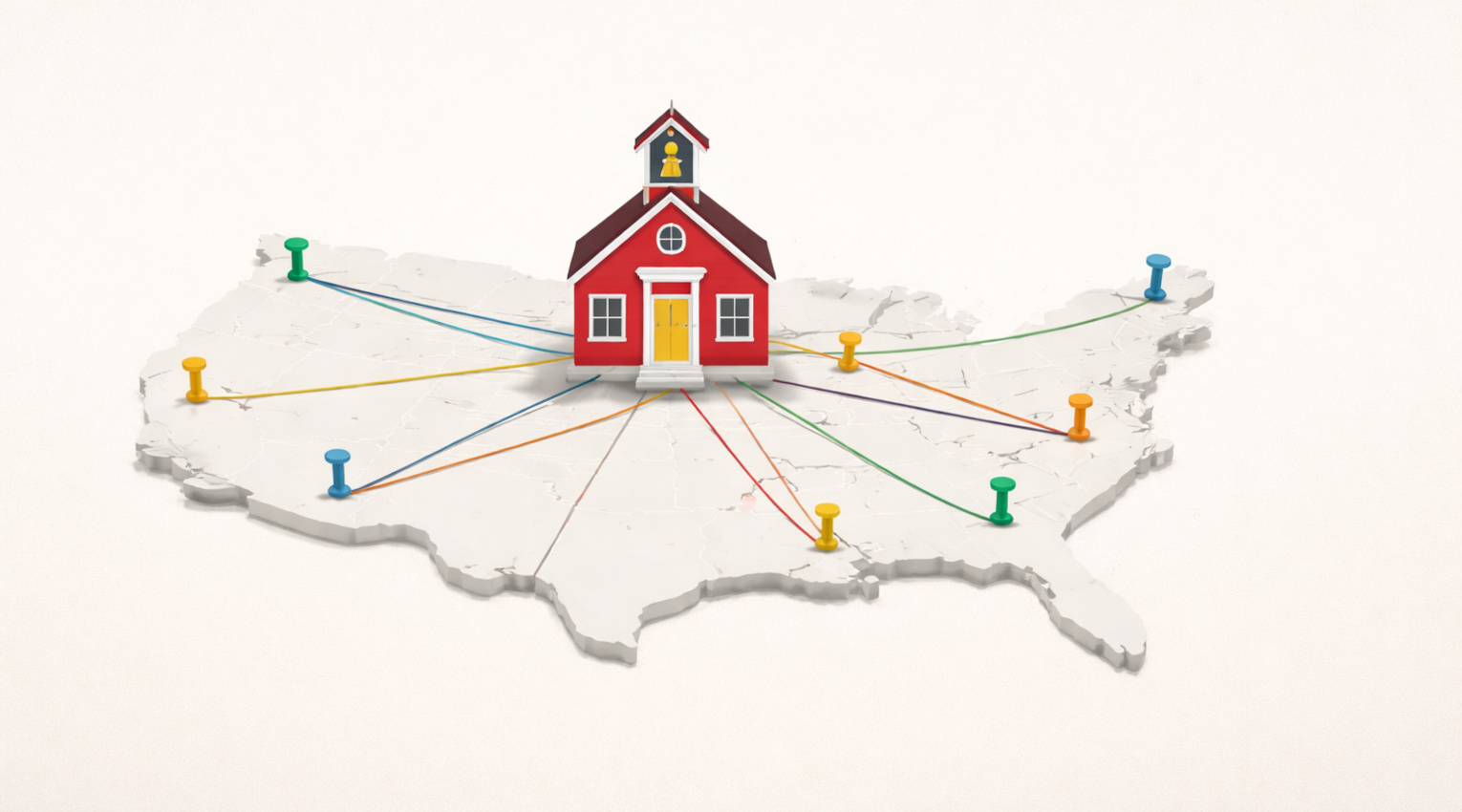
Indeed, there are now 34 states with programs allowing at least some families to escape poorly managed government schools.
Some states – notably Florida and Arizona – allow all families to choose their best educational options.
All things considered, what’s happening in education is great news.
But there is one disappointing aspect, which is that the shift to school choice has been lopsidedly partisan. Republican-controlled states are implementing choice, generally on the basis of party-line votes.
I’m hoping this will change, however, and this is why I want to highlight a column in the New York Times by Jorge Elorza, the former mayor of Providence, Rhode Island.
As you can see from these excerpts, he wants members of his party to embrace school choice.
Trust in public schools is at a record low, and families with the means to leave increasingly do, leaving districts with half-empty buildings. This is what an institutional breaking point looks like. …This moment of crisis in K-12 education is an opportunity to reimagine it from the ground up. We need nothing less than a new educational operating system — one that channels public funding through students and families directly, rather than through centralized district bureaucracies. …Instead of a top-down model that delivers a one-size-fits-all experience, we need an open, dynamic system where educators have the freedom to design new schools — and parents have the power to choose among them. When families have more agency, schools are compelled to adapt and improve to earn their trust, and a more responsive system follows. …the money follows the children themselves to different learning environments, whether public or private, that families believe best meet their needs. This vision is not theoretical. Most of our international peers fund students and diverse types of school, not large public systems. States across the country have begun to follow suit. …research by the scholar Ashley Rogers Berner shows that when countries fund many types of schools while holding them to common academic standards, students thrive both academically and civically. A growing body of evidence and research, across the United States and abroad, shows that a well-designed school choice program can produce academic and civic results that match or surpass those of traditional schools. …If we want children to thrive, we need an education system as dynamic and future-ready as the world ahead.
Given the overwhelming evidence that currently exists in favor of school choice (see here, here, here, and here), this should be a slam-dunk argument.
So why do most Democrats oppose choice?
Unfortunately, the answer is rather sordid. Democratic politicians are putting union bosses first and kids last. To be more specific, teacher unions and others who benefit from the status quo are very opposed to school choice because it threatens their monopoly power.
Here are the two things needed to understand why Democrats don’t support choice.
Teachers unions and other beneficiaries of the education establishment are among the top donors to the Democratic party and the campaigns of Democratic politicians. That money can be addictive to a political party.
However, just because political choices are understandable, that doesn’t make them right.
Schools should exist for the benefit of students, not for the benefit of bureaucrats.
Indeed, it is fundamentally immoral to sacrifice children just to curry favor with union bosses.
So kudos to Mr. Elorza for urging other Democrats to support school choice. I included “Part I” in the title of today’s column in hopes that other Democrats will follow.