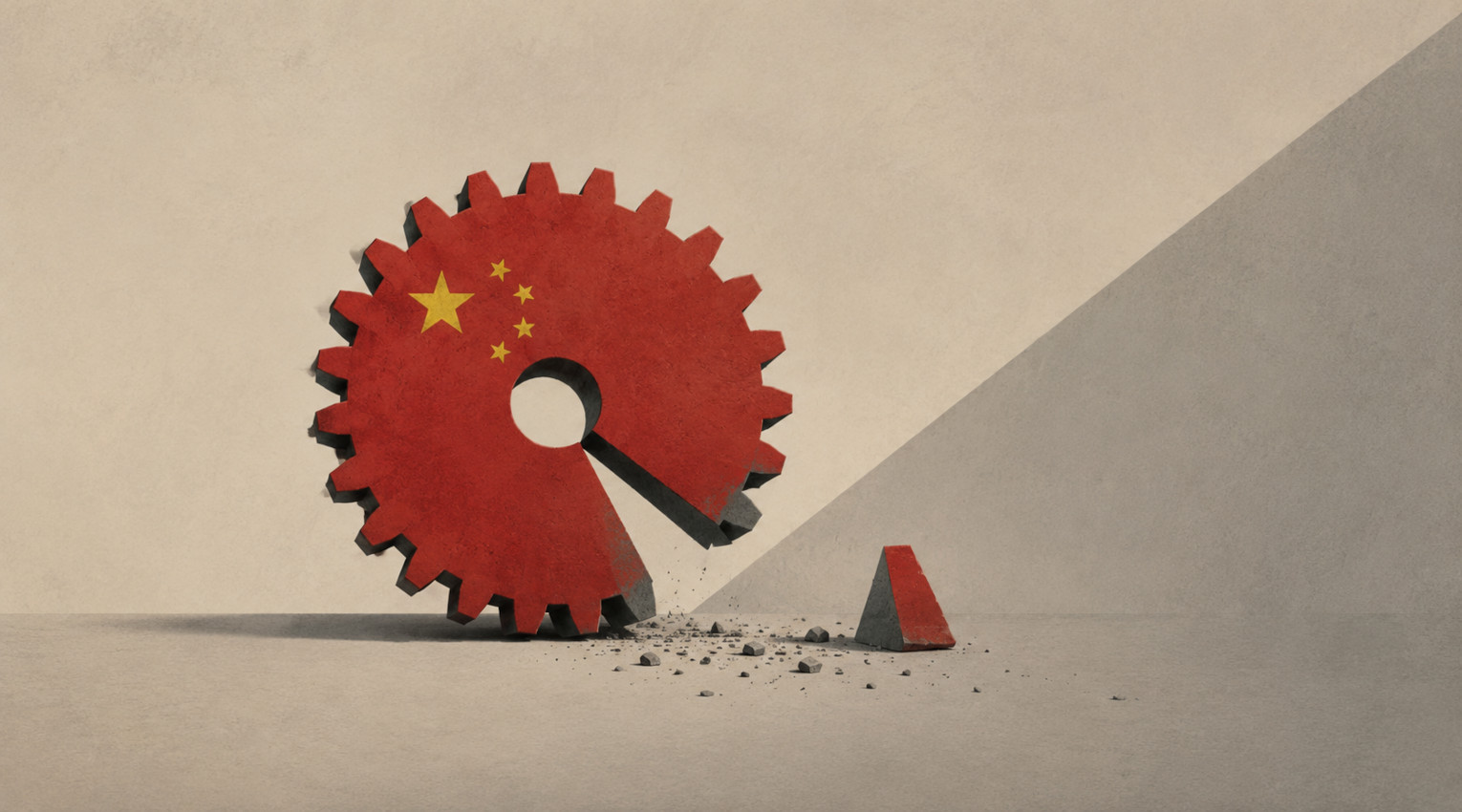
I’ve written several columns (here, here, and here) criticizing industrial policy, which occurs when politicians provide special favors to specific firms or industries.
And I’ve also written several columns (here, here, and here) warning that China is hurting its economy by engaging in those policies.
So I want to revisit a study from the International Monetary Fund measuring the extent of Chinese industrial policy (IP) and the impact of those interventions on economic performance.
Here’s something I didn’t share when I wrote about the study last year. It’s a table from the report that identifies various types of industrial policy and highlighting (in red) the ones used by China.
Let’s now look at some excerpts from the report, which was authored by Daniel Garcia-Macia, Siddharth Kothari, and Yifan Tao.
In China, IPs have long been a centerpiece of economic policy. The government has used an array of policy tools, including (but not limited to) cash subsidies, tax benefits, subsidized credit, subsidized land, trade and regulatory barriers, and industry coordination to promote certain economic sectors… The main result of this analysis is that the equivalent fiscal cost of IP in China is estimated at 4.4 percent of GDP as of 2023. The largest instrument is cash subsidies (at 2.0 percent of GDP), followed by tax benefits (1.5 percent), land subsidies (0.5 percent), and subsidized credit (0.4 percent). …The estimation results show that IP affects the allocation of production factors, but the different instruments do so in opposite ways. Subsidies are associated with excess production relative to a no-distortions benchmark, while trade and regulatory barriers limit production, possibly by increasing the market power of incumbents. Overall, factor misallocation from IP is estimated to reduce domestic aggregate TFP by about 1.2 percent relative to a no IP baseline, and this channel could reduce the level of GDP by up to 2 percent.
That excerpt will be familiar to people who read last year’s column, but it’s worth recycling.
Now let’s look at something new from the report. It’s a visual measuring the efficiency of different companies.
And here’s what it means (keeping in mind that TFP is total factor productivity and TFPR is revenue per unit of inputs).
Figure 9.1 shows that in most sectors, leading firms have higher TFP than the average firm. This is expected, as it would be the outcome of the model under no distortions. However, Figure 9.2 shows that leaders typically have lower TFPR than the average, implying that they are producing at inefficiently high levels. This is particularly true for SOE leaders.
So why am I covering some new material from this study?
Because it gives me an opportunity to hammer home two key points.
The key thing to understand is that we should want more economic output (i.e., GDP).
And GDP growth, adjusted for inflation, is a function of population growth and productivity growth.
So what we really want is increases in per-capita GDP. After all, if a nation’s population increases by 10 percent and GDP grows by 5 percent, the average person is losing.
My second point is that government interference inhibits productivity growth.
Which explains why I’m against industrial policy and have argued we should not copy China’s misguided approach.