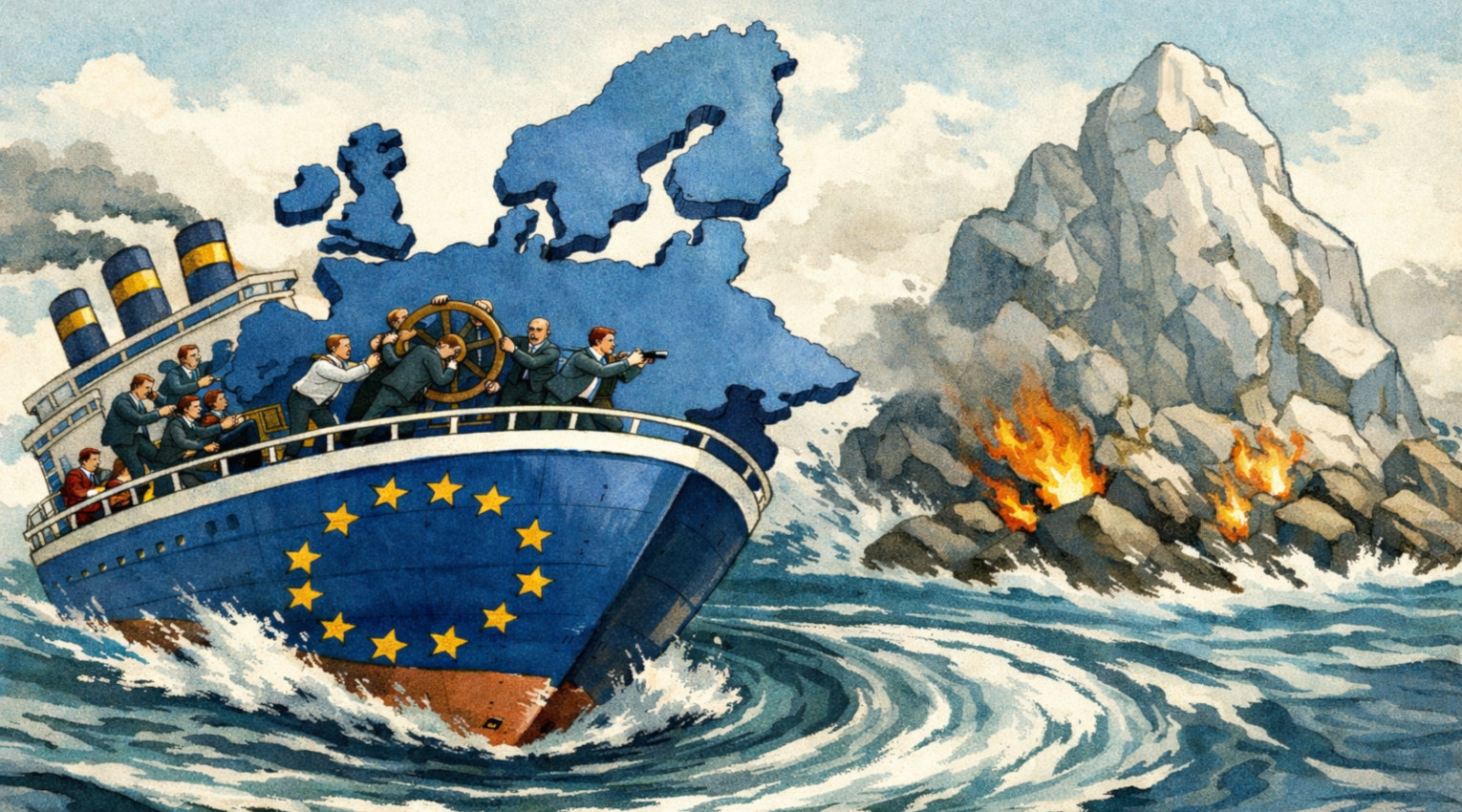
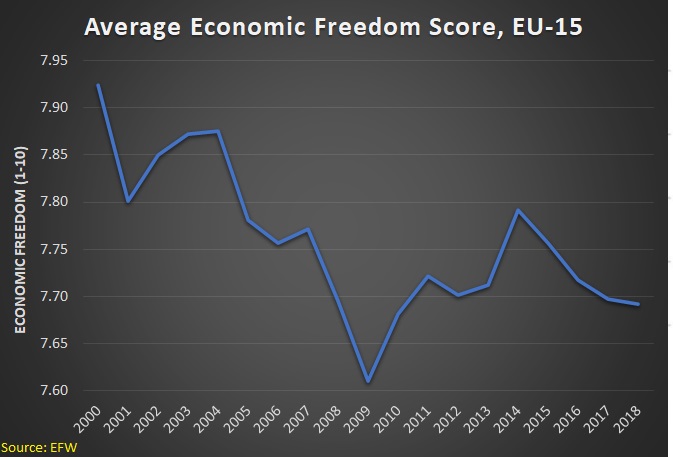
About five years ago, I fretted about the gradual erosion of economic liberty in Western Europe.
And I followed up two years ago with similar analysis, grousing that the entire western world was joining Western Europe in the drift toward more statism.
When you combine this grim trend with data about demographic decline, which is even more discouraging, it is very difficult to feel optimism about Europe’s future.
Given my concerns, I was very intrigued by a column in the Washington Post by David Ignatius. He writes that conflicts and disagreements with Trump will lead Europeans to focus more on growth.
Here are some excerpts.
Europe’s stagnation has been a background theme of nearly every Davos conference I’ve attended for 25 years. Changing that status quo was hard, while following America’s lead was easy. But Trump has shifted that balance in his second term. He has transformed the transatlantic alliance into a humiliating exercise in tariffs, White House demands and insults. …Canadian Prime Minister Mark Carney, whom I’ll count here as an honorary European, …listed a string of independence measures his country is taking, including a new “strategic partnership” with China. …Europe needs to fix an economy that “still lags behind that of the U.S.,” said French President Emmanuel Macron. …European leaders know they are being left behind…and they finally seem to recognize that the European Union’s rules and regulations, and its heavy tax burden, are stifling the growth they need. European leaders want their own version of “Liberation Day.” …it means creating innovation-friendly economies at home — with fewer rules, lower taxes and a less rigid welfare system. …But in Britain and Europe, weak leaders haven’t been able to implement reforms — and Euro-sclerosis seems worse than ever. …The Greenland putsch might finally have shocked Europeans into taking control of their destiny — and beginning the economic reforms they need to survive as prosperous countries.
I like this hypothesis. I want it to be true.
Europe needs more economic freedom, and I don’t care if they adopt good policy because they are copying Javier Milei or because they don’t like Trump.
That being said, I don’t think the hypothesis is correct. Let’s look at recent policy developments in the five major European countries.
Spain is in the midst of a spending spree that has increased the burden of government and dramatically boosted government debt levels.
Italy may not be going in the wrong direction as fast as some other European countries, but fiscal policy is gradually worsening and there are no plans to halt this decline.
By the way, it’s not just the five big nations of Western Europe. If you look at the 15 nations that were part of the European Union before it expanded to Eastern Europe, every single one of them has less economic liberty today than in 2000.
The average decline is .29 on a 0-10 scale according to the Fraser Institute.
The bottom line is that I want this downward slide to change. Unfortunately, I don’t see that happening.
P.S. The column mentioned the Draghi Report, but I was not impressed by that document’s milquetoast recommendations.
P.P.P.S. If it makes Europeans feel better, economic liberty also has been declining in the United States this century (those who cherish bipartisanship will be happy to know that Bush, Obama, Biden, and Trump all deserve part of the blame).