I have multiple columns comparing blue states and red states (here, here, here, here, here, here, and here), as well as multiple columns documenting how people and businesses are fleeing blue states (here, here, here, here, here, and here).
All of those columns could be summarized in two sentences.
Blue states imposes higher taxes, a larger spending burden, and more regulation.
Blue states don’t provide better-quality government in exchange for all these costs.
Today’s column will be look at two examples of blue-state dysfunction, and both involve tragic wildfires that caused immense damage.
We’ll start in Hawaii, where a horrible fire wreaked havoc on the island of Maui in 2023.
Sadly, government has made a bad situation worse, as Jonathan Helton of Hawaii’s Grassroot Institute explained last month in a column for the Washington Post.
Here are some excerpts.
Nearly three years after wildfires engulfed Lahaina, Hawaii, rebuilding continues to move at a glacial pace. …More than 2,200 structures were destroyed. So far, only 220 houses have been rebuilt. …vacant lots still haunt the once-vibrant town. Not a single business destroyed in the fires has been rebuilt, and just two commercial permits have been issued. …To build in any of the county’s historic districts, property owners must receive approval from the volunteer Cultural Resources Commission — a body plagued by vacancies that often fails to make a quorum. …Lahaina’s recovery has also been slowed by more common regulations layered on top of the historic-preservation rules. …These regulations just scratch the surface. Federal flood-zone rules, state environmental laws and county-level infrastructure requirements for new construction add more hurdles for residents looking to rebuild their lives. …This regulatory layer cake does not work well in normal times. Housing projects can take up to seven years to be approved. Hawaii has some of the country’s strictest barriers to building new housing, which has driven the median price of a single-family home above $1 million in three of its four counties. But in the aftermath of a disaster like the wildfires, these rules are devastating for builders and homeowners trying to get back on their feet. …Lahaina’s recovery didn’t have to be so slow and painful. After Hurricane Iniki rampaged across the island of Kauai in 1992, county officials there quickly waived many laws similar to those delaying Lahaina’s recovery. It’s a shame the 1992 response wasn’t embraced as a model.
Unfortunately, it appears there has been very little progress since then.
Now let’s travel to California, where coastal towns such as Malibu suffered a similar tragedy in early 2025.
Sadly, as reported by Benjamin Brown of the New York Post, bureaucracy is also making it very difficult for people to rebuild.
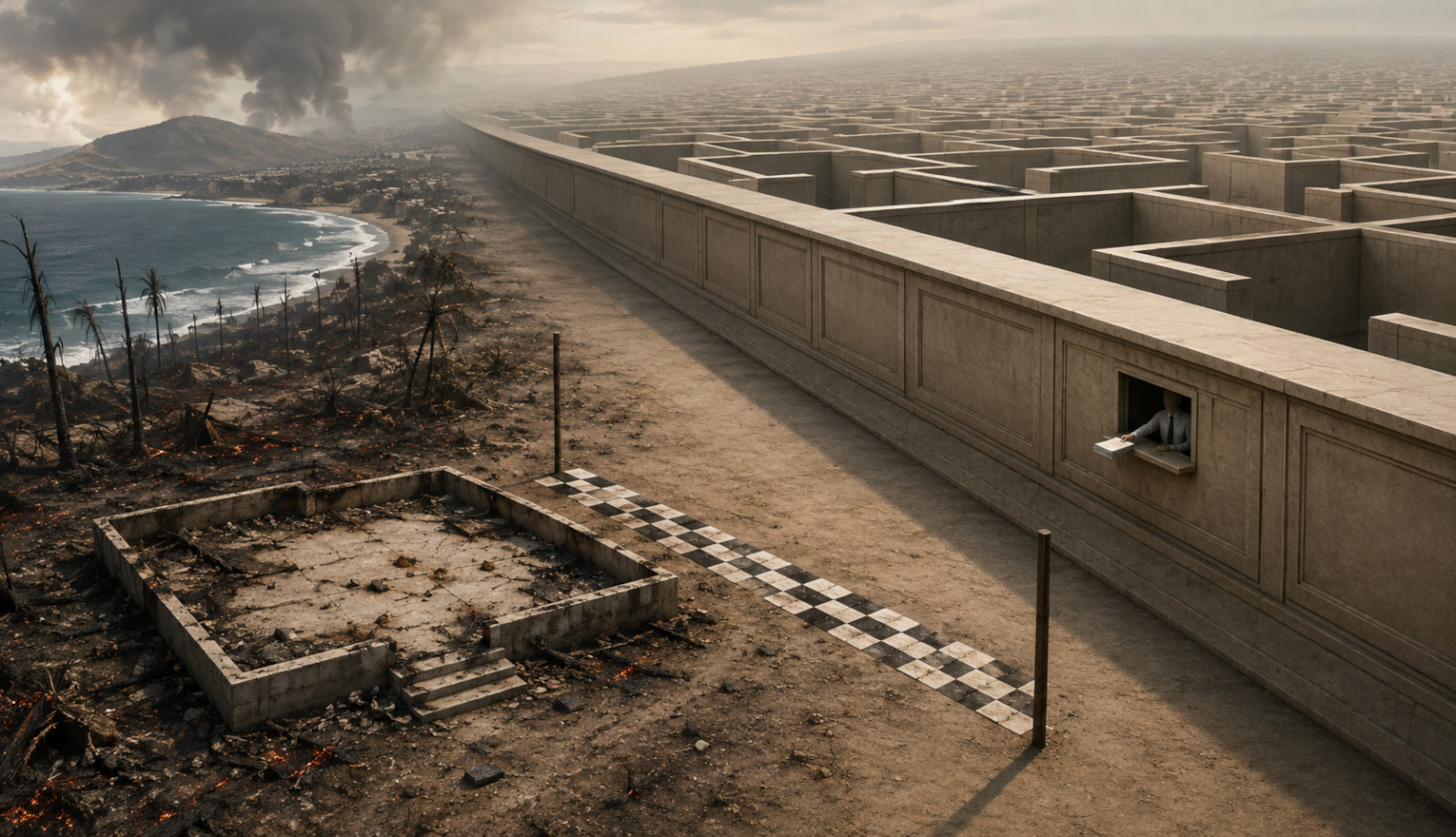
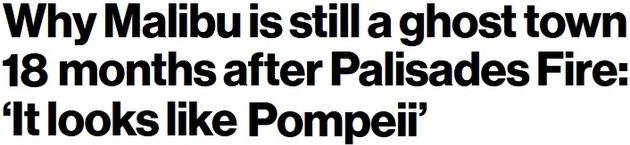
More than a year and a half after the Palisades Fire tore through Malibu, only a handful of homes along the iconic Pacific Coast Highway have begun rebuilding — leaving the famous area a ghost town of charred ruins. …the few that have started rebuilding say it’s taken about year of headaches to green light shovels in the ground. …Then-Mayor Marianne Riggins told Realtor.com in November that at least 700 structures were destroyed, with nearly 600 of those being single-family homes. Currently, 61 homes that burned down are being rebuilt. …“There’s probably 200 people going, ‘I don’t know whether I want to rebuild, I’d like to rebuild, I don’t know if its even possible, is the city going to be impossible,’” he said. …One of the first beachfront homeowners to secure a permit to rebuild, Randall called the process a “battle.” “The state has a lot of regulations for us and then we live on the coast, so it’s even more,” Randall said.
Having written last year about how sclerotic bureaucracy was hindering the rebuilding process in California, it’s once again disappointing to see only scant progress.
I’ll conclude today’s column by unleashing my inner libertarian and explaining that politicians and bureaucrats should simply get out of the way. Remove the obstacle course of red tape.
People should be allowed to rebuild whatever was destroyed, and how that gets done should be a private matter involving banks, insurance companies, builders, and property owners.
And I won’t even be a hard-core libertarian by asserting that people have a right to build something dramatically different. So if you had a two-bedroom house in Lahaina or Malibu, you would have to deal with bureaucracy if you wanted to build townhouses or a commercial structure. But you should have the right to rebuild something similar to your original two-bedroom home without requiring bureaucratic approval.
The moral of the story is that excessive government is a recipe for inefficiency and higher costs. This is a problem in Washington, of course, but some states and localities compound the damage more than others. And that’s exactly what we see in Hawaii and California.
Remember, government is generally the problem, not the solution (unless you’ve asked a very strange question).