
Thanks to demographic change and poorly designed entitlement programs (primarily Social Security, Medicare, and Medicaid, but also food stamps and other welfare programs), the United States is stumbling toward a grim fiscal future.
Let’s review some fiscal facts from the Historical Tables of the Budget, staring with a breakdown of America’s 1962 budget. The federal government spent about $112 billion and only 30 percent of the budget went to entitlements.

Now let’s look at the current year.
Uncle Sam is spending nearly $7.7 trillion and 62 percent of all outlays are being consumed by entitlement programs.

The two pie charts illustrate how the composition of the federal budget has changed over time.
Now let’s look at the growth of entitlement spending between 1962 and 2026. But we’ll use inflation-adjusted dollars to make the numbers honest.

At the risk of understatement, entitlement spending is on an unsustainable upward trajectory.
So what did President Trump propose in his just-released budget? Did he pick from options like these?
- Modernizing Social Security with personal retirement accounts to lower the program’s long-run shortfall
- Modernizing Medicare to be akin to the choice-based system available to federal bureaucrats
- Ending the one-size-fits-all panoply of redistribution programs by copying the success of welfare reform.
Sadly, Trump didn’t pick any of those choices.
Instead, he proposed a bigger defense budget matched with some restraint on non-entitlement domestic programs.
This headline from a Washington Post report tells you everything you need to know.

For purposes of today’s column, let’s ignore the president’s plan to shift money from “non-defense discretionary” to the Pentagon.
Why? Because the amount of money involved is pocket change compared to the long-run problems caused by entitlements.
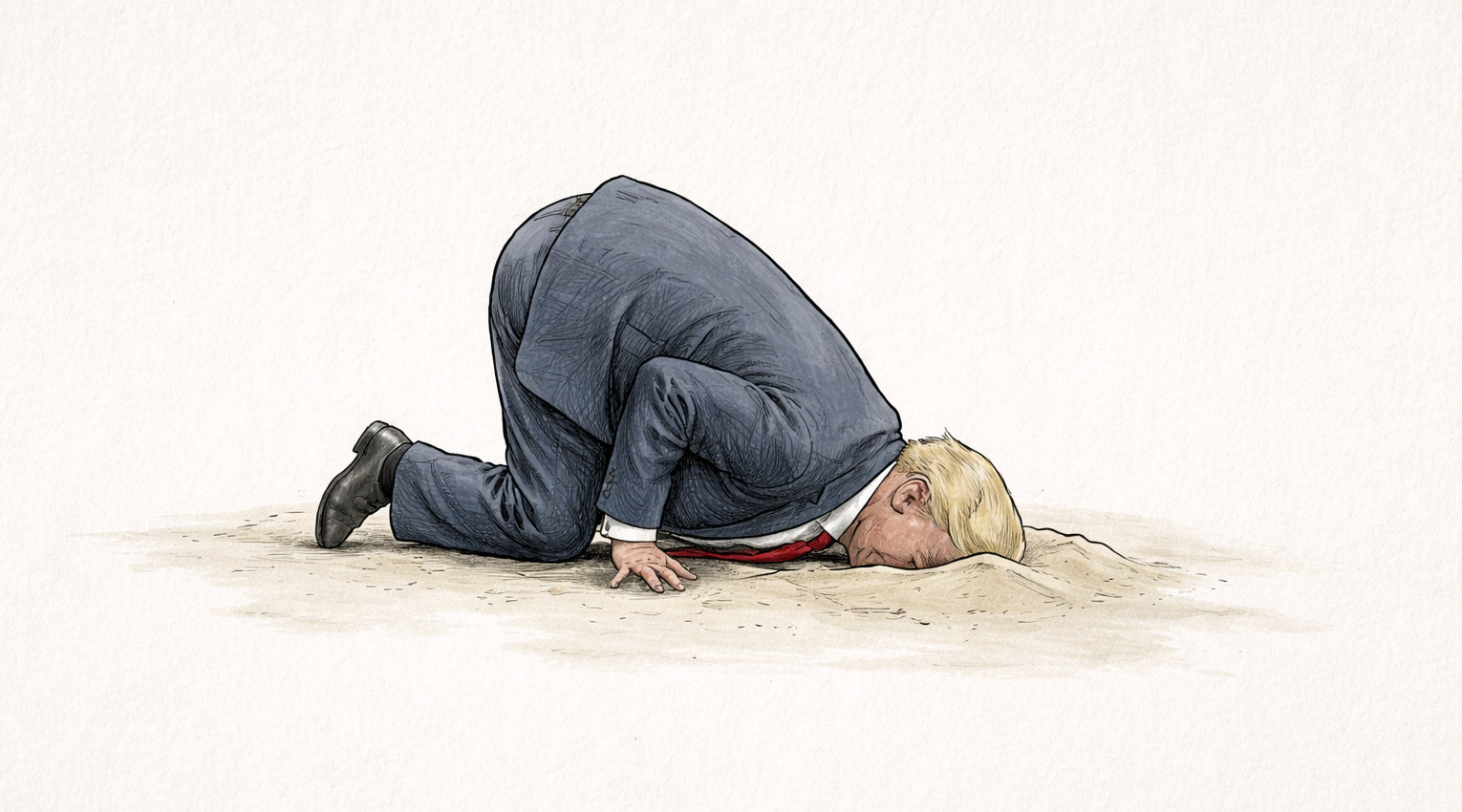
And this is why it is so disappointing that Trump has proposed a budget that leaves entitlements untouched. Kicking the can down the road may be politically convenient, but it necessarily means that the United States eventually will suffer from massive tax increases, a debt-driven fiscal crisis, or Argentinian-style inflation (pre-Milei, of course).
Given the fecklessness of politicians in Washington, we’ll probably get stuck with all three.
P.S. In partial defense of Trump, there were some reforms to limit the growth of Medicaid spending in the 2025 budget legislation. So the answer to my 2024 question is “some, but not nearly enough.”