
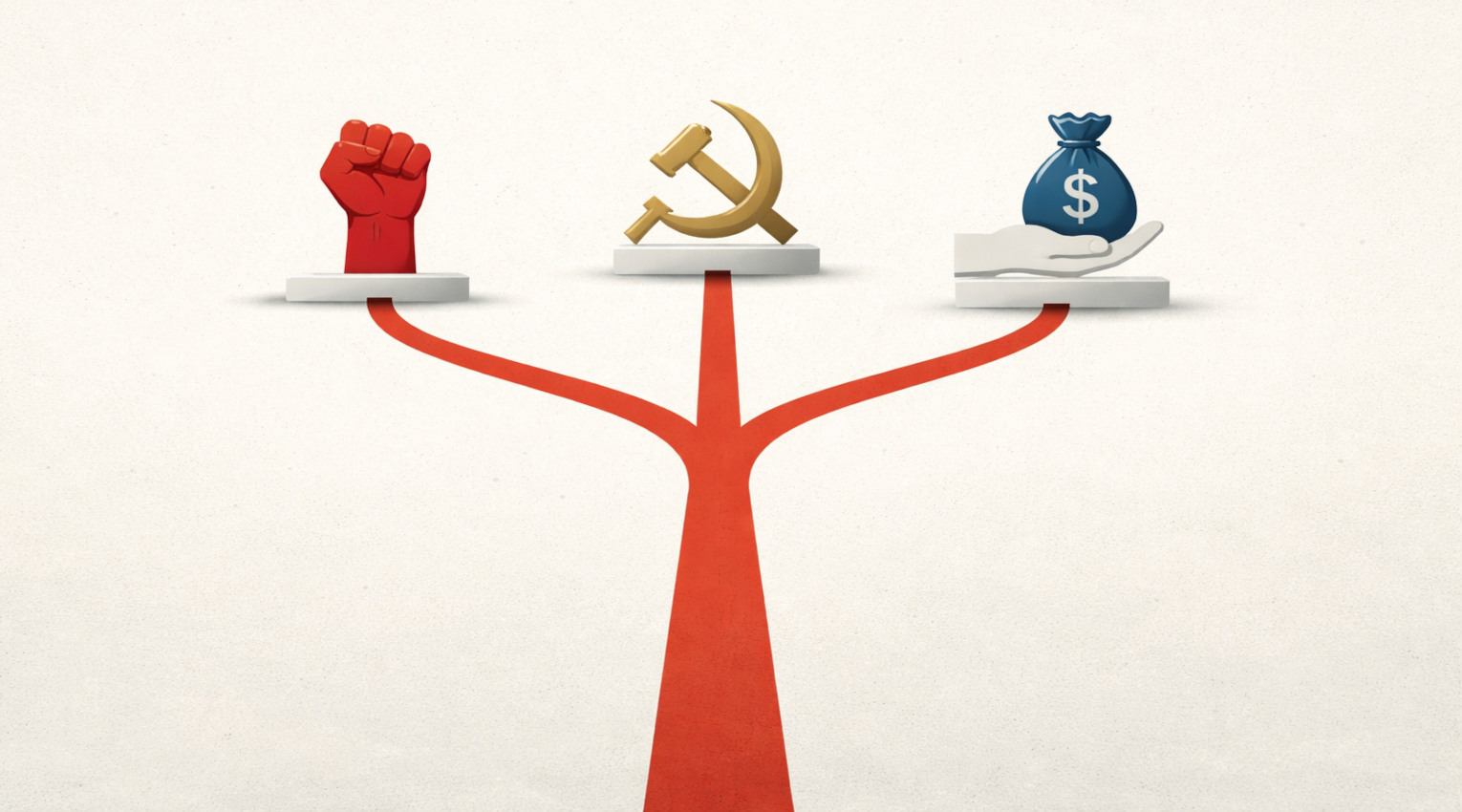
I’ve written a four-part series (here, here, here, and here) explaining why socialism is a bad idea, but let’s use today’s column to define this evil ideology.
As I mentioned in the video, genuine socialism is based on three very specific concepts.
- Government ownership of the means of production
- Central planning to determine the allocation of labor and capital
- Price controls as a necessary consequence of items #1 and #2
Outside of a few despotic regimes such as Cuba, North Korea, and Venezuela, there are very few examples of real socialism in the world today.
Instead, the left in most nations today is in favor of redistributionism. In other words, there are private companies and market-driven prices, but government uses fiscal policy to push (to varying degrees) for equality of outcomes, as illustrated by these two items.
1. High tax rates, either to generate revenue or punish success
2. A cradle-to-grave welfare state to create dependent voters
This is a good description of Nordic nations such as Sweden, Denmark, and Finland. Interestingly, those nations tend to be very pro-market in areas other than fiscal policy.
In many other nations, however, the left is also in favor of varying degrees of government intervention. They don’t want government to own the means of production, but they like having the ability to interfere with markets.
So let’s add a third item.
3. Industrial policy/cronyism to reward favored companies
This is a good description of nations such as France and Italy. They have high taxes and the big welfare state (items #1 and #2), and they augment the damage with lots of intervention (item #3).
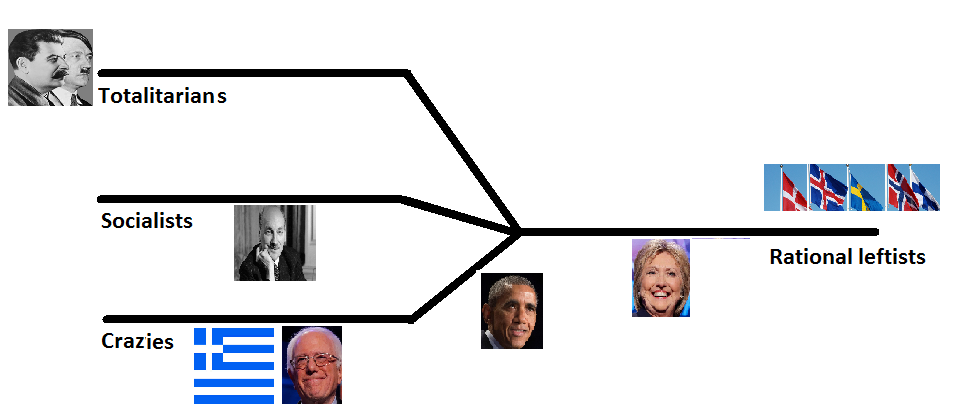
Back in 2016, I put together a visual in an effort to highlight the varying strains of leftism.
The Nordic nations were the rational leftists (relatively speaking) and I then identified three strands of hard-core leftism.
The genuine socialists were represented on the far left by Stalin at the top and Clement Attlee in the middle (the United Kingdom after World War II is the only example of nation voting for something close to real socialism).
Meanwhile, incoherent left is at the bottom.
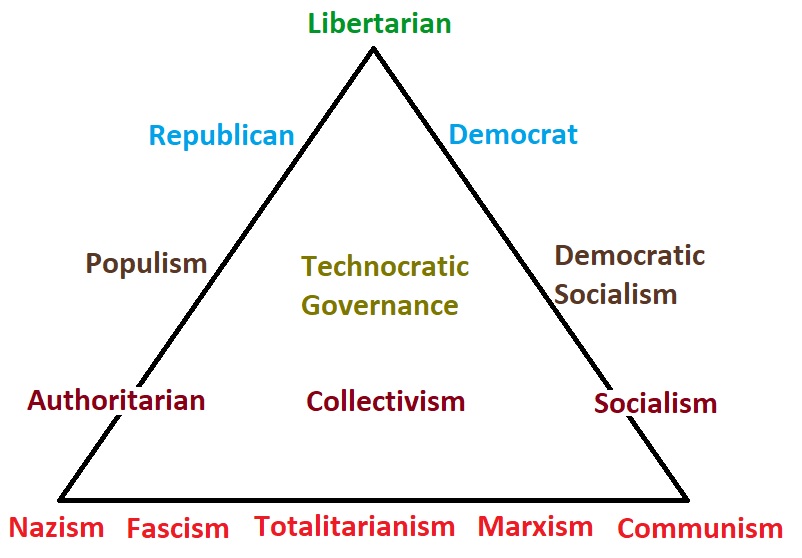
Though I now think my triangle from 2019 is a better way of categorizing strains of thought, largely because it allows a distinction between the totalitarian ideologies of fascism and communism.
I’ll close with a final observation about the difference between communism and socialism.
And we’ll defer to the Socialist Party of Great Britain, which insists that there is no difference.

In terms of economic policy, this is accurate.
But I would argue that there is a difference in that communism inevitably means totalitarian dictatorship (with socialist economic policy).
By contrast, the United Kingdom after World War II shows that you can have something close to socialist economic policy without dictatorship (indeed, Margaret Thatcher got elected in 1979 to reverse socialism because that failed ideology had “run out of other people’s money.”
P.S. A poll in 2020 asked people to identify socialist nations. I don’t think it was very accurate. I prefer using Economic Freedom of the World. Indeed, I even created a “socialism slide” to demonstrate how close nations get to real socialism.
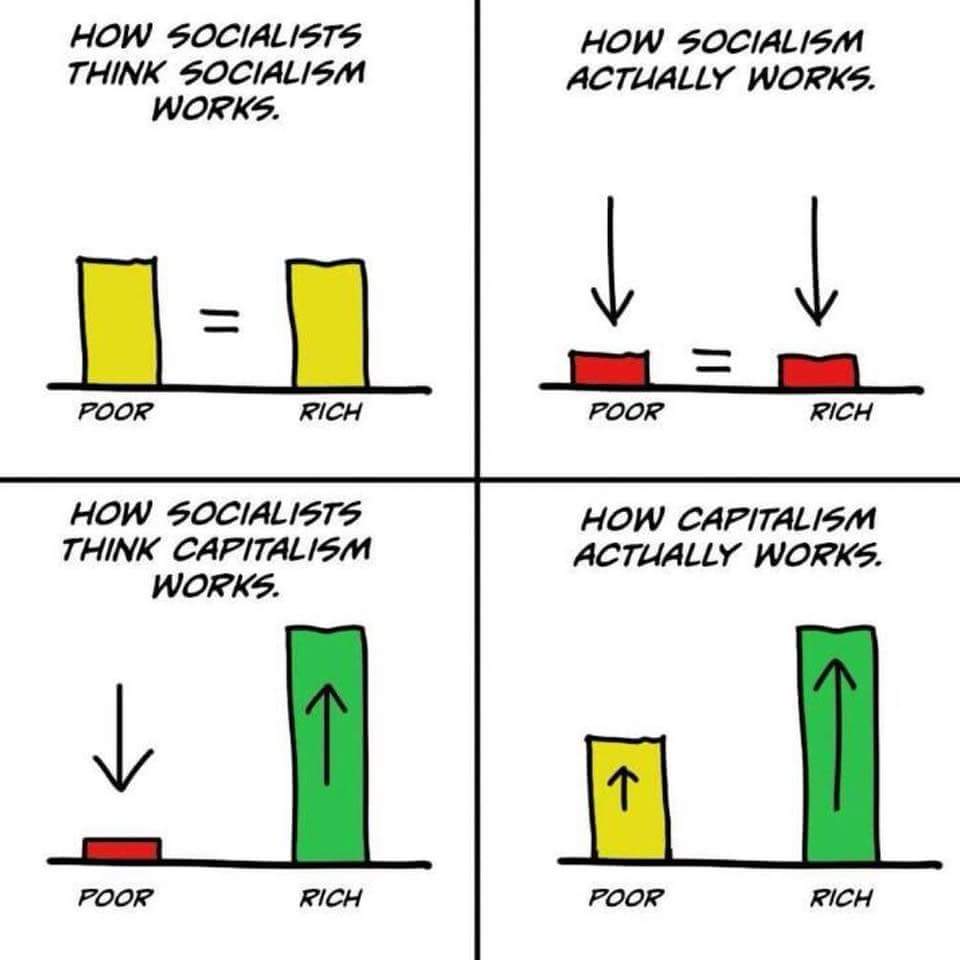
P.P.S. Dictionary definitions of socialism always acknowledge that the ideology is based on government ownership of the means of production, which is obviously correct, but those definitions also state that socialism also is about equality of outcomes.
I object to that part because it fails to mention two essential caveats.
- First, socialism may mean more equality, but everyone is equally poor. Failure to acknowledge this is a gross oversight.
- Second, while 98 percent of people in socialist nations are equally poor, the governing elite manages to live very comfortably.
The bottom line is that all variants of leftist economic policy are misguided. I don’t want totalitarian socialism, democratic socialism, Swedish-style redistributionism, or French-style statism.