Let’s start today’s column by recycling my 2009 video about the link between big government and corruption.
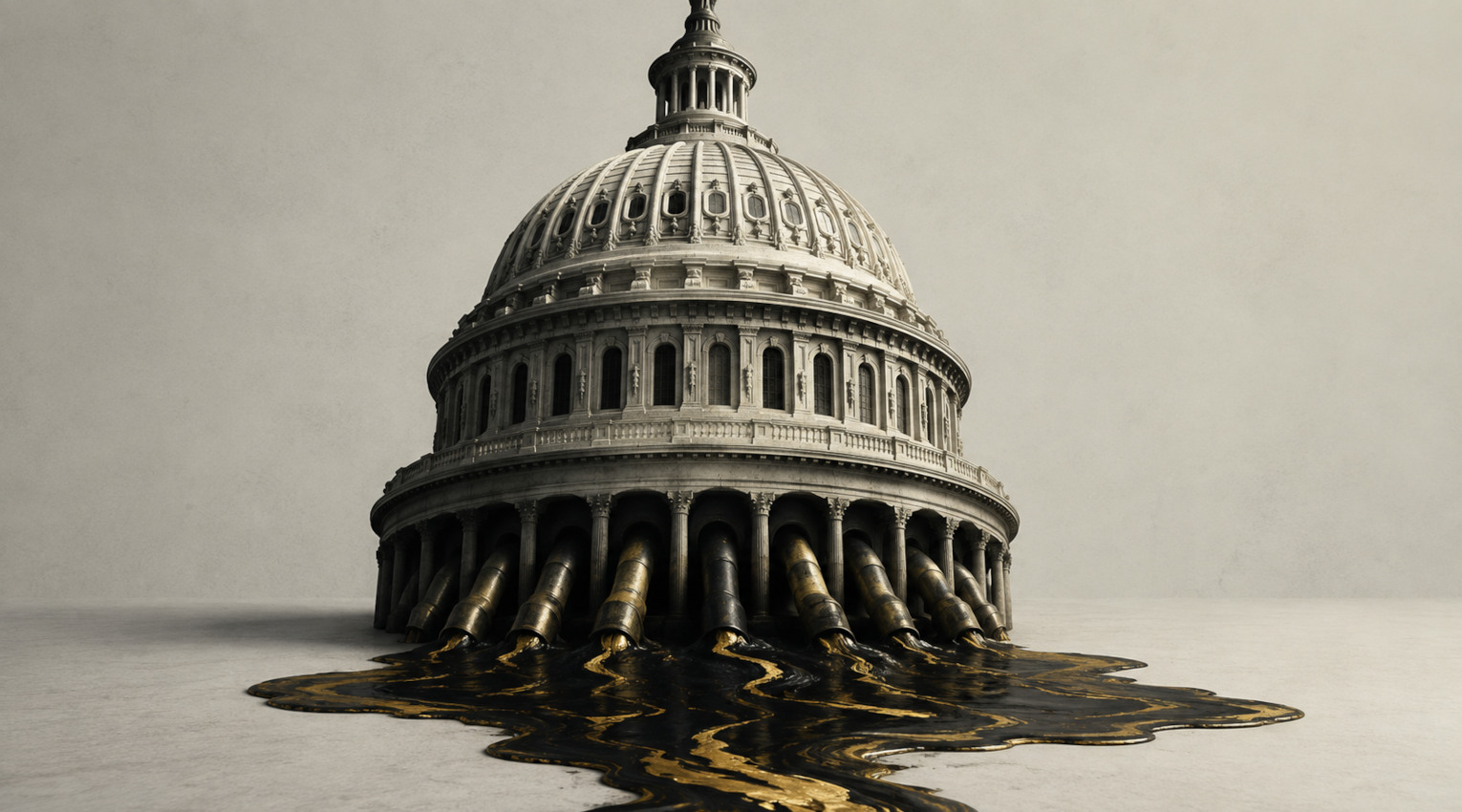
If you don’t want to spend a few minutes watching a video, I can summarize the message in a single sentence: Corruption is much higher when government has lots of power over the economy.
Why? Because interest groups and politicians both benefit from distorting the playing field.
But let’s look more broadly at the issue, and we’ll cite Marian Tupy’s column in the Wall Street Journal. Here are some excerpts, starting with some of Trump’s oleaginous actions.
Three days before his 2025 inauguration, Donald Trump launched a cryptocurrency called $TRUMP. That May, he dined with 220 of its largest holders, some of whom bought up the coin expressly to secure invitations. In October Mr. Trump pardoned Changpeng Zhao, a Binance co-founder who had been convicted of violating money-laundering laws. Binance had assigned a team to develop the stablecoin for World Liberty Financial, a crypto venture tied to the Trump family. The undertaking netted Mr. Trump hundreds of millions, part of $1 billion in crypto gains, while most token buyers lost money. Last year Paramount agreed to pay Mr. Trump $16 million—with some payments made to his future presidential library—to settle a lawsuit it had called meritless, and within weeks the government approved its $8 billion merger with Skydance.
Marian then asks the all-important question.
…what makes such conduct possible in the first place?
And he has the right answer.
The power of the federal government, which commands the fate of every major enterprise in America. A tariff waiver can mean billions for one company and bankruptcy for its rival. An antitrust filing can erase a decade of shareholder value in an afternoon. A procurement decision can build a company, and a regulatory finding can bury one. When the government holds that much influence, officials need not even demand tribute. Tribute arrives on its own. …When government can make or break a business, businesses will invest in making friends with government, and the return on a lobbyist will exceed the return on an engineer. Corruption and discretionary power go hand in hand.
He also has the right solution.
Libertarians have long argued for a wall between the economy and the state: a government confined to courts, defense and a handful of public goods—too small to be worth bribing. Nobody buys favors from an office that has no favors to sell.
I’m actually not quite as optimistic as Marian. There will still be room for corruption even if government is limited to a few roles such as defense and courts.
But there would be a huge reduction in graft for the simple reason that politicians will have fewer goodies to dispense.
And if government is much smaller, perhaps there will be greater ability to monitor what’s happening, which would lead to even less corruption.
In other words, maybe a smaller government is not only more competent, but also more honest.
P.P.S. Are bad people drawn to politics, or does the political system corrupt good people? I address that issue in my four-part series (here, here, here, and here) about America’s “Wretched Hive.”
P.P.P.S. Not every D.C. scandal is evidence of corruption, as illustrated by my (limited!) defense of Hunter Biden.