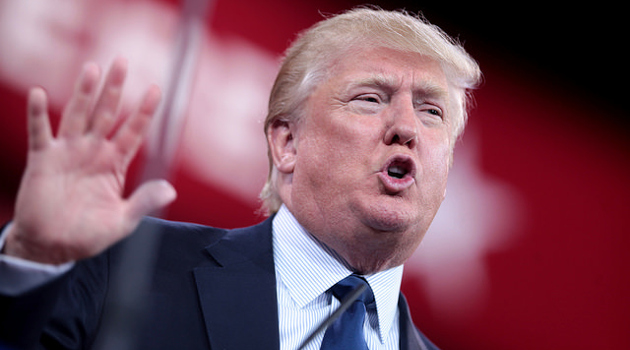
But my criticisms were not based on partisanship. I praise both Republicans and Democrats when they expand economic liberty and I condemn both Republicans and Democrats when they expand the burden of government.
Having established my bona fides, let’s now look at whether Trump’s policies are helping or hurting ordinary people.
We’ll start with the latest Employment Cost Index from the Bureau of Labor Statistics.
And we’ll augment that with this chart from the Real Earnings report, also from BLS.
The main takeaway is that both data sources show modest increases in income, adjusted for inflation.
And that’s definitely an improvement over what happened at times during the Biden years.
But does “modest improvement” merit a good grade or merely a passing grade.
In a new editorial, the Wall Street Journal is not very impressed. Here are some excerpts.
Paychecks are barely keeping pace with rising costs. …72% of Americans rate the economy as fair or poor, essentially unchanged from when Mr. Trump entered office. Mr. Trump is right that he inherited the inflation mess from Joe Biden, but Americans don’t feel that their situation is improving. Job growth has stalled since the spring, and more important is that incomes after inflation haven’t been rising fast enough. The Bureau of Labor Statistics reported on Thursday that real average hourly earnings for all employees have increased only 0.8% over the last 12 months. That’s down from a 1.4% 12-month rate a year ago and 1.4% in April before most of his tariffs hit. …The President is betting on the benefits of his tax bill kicking in next year. Its expensing provisions could lift business investment… But his tariff barrage is creating uncertainty and adding costs for businesses.
In a column for the U.K.-based Telegraph, Melissa Lawford highlights other problems in the Trump economy.
Donald Trump’s surprise address to the nation on Wednesday night saw him insist everything in the economy is just fine. …America’s affordability squeeze is hitting low income workers hard, a phenomenon that has been well documented. But it is also increasingly choking the middle classes too. …polling shows housing costs are the second biggest affordability concern for Americans after groceries. It was cited by 38pc of people as the most challenging thing for them to afford… Voters’ anger towards the president around affordability is building, says Republican pollster Brent Buchanan. …Trump also said he would soon announce a new chair of the Federal Reserve “who believes in lower interest rates by a lot”. But there is a risk this could backfire. Mortgage rates are not determined by the Fed rate but by yields on 10-year government bonds. If bond investors think there is a threat to Fed independence, which would impede the central bank’s ability to control inflation, they will demand higher returns on Treasuries. In turn, this would drive up mortgage rates.
Here’s a chart from the Telegraph column.
There are two points I’ll add to this analysis.
First, Trump is undermining himself (and undermining the GOP) with protectionism. And I think the data from the Bureau of Labor don’t fully capture the problem. The key thing to understand is that protectionism doesn’t cause inflation (look at the Federal Reserve if you want to assign blame). Instead, Trump’s taxes on trade are causing the economy to become less efficient and less competitive. So protectionism doesn’t effect the overall price level, but it does hamper income growth and it does make some things more costly. The net effect is that people are more likely to feel like their stuck on a treadmill.
Which was the problem that plagued Biden.
Second, the column in the Telegraph raised a very important point about the downside risk of Trump wanting the Federal Reserve to lower interest rates. What Trump is really saying is that he wants an easy-money policy from the Fed. That approach might temporarily lower interest rates, but the long-term consequences – higher prices and higher interest rates – are very damaging.
P.S. The WSJ editorial pointed out that Trump inherited the inflation problem from Biden. Fair enough, but it should have pointed out that Biden inherited an inflation problem from Trump.