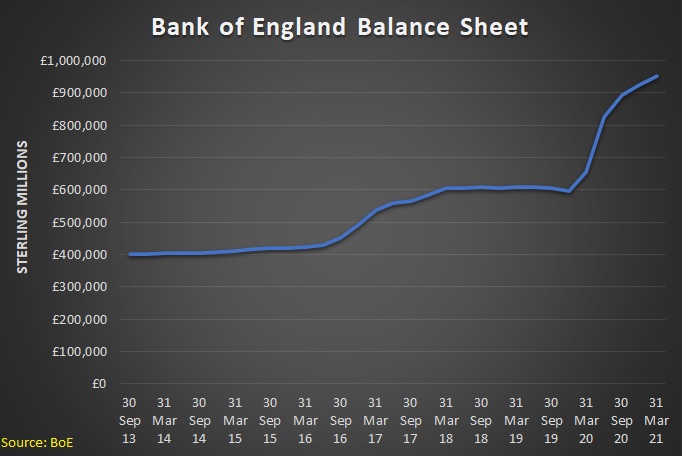
And I’m beginning today’s column by again sharing the chart from the Bank of England.
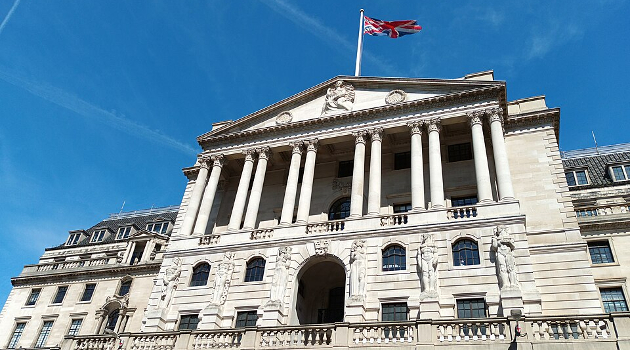
Why? Because the the governor of the Bank of England, Andrew Bailey, just blamed Brexit for the United Kingdom’s weak economy.
Here are some excerpts from a report by Sam Fleming and Claire Jones in the U.K.-based Financial Times.
Brexit will have a negative impact on the UK economy for the “foreseeable future”, the Bank of England governor has warned… Bailey was speaking after Rachel Reeves, the chancellor, pointed this week to “severe and long-lasting” effects from Brexit as the Treasury braced for a tough verdict from the Office for Budget Responsibility on the growth outlook in next month’s Budget. …“The growth model of Adam Smith is clear on this point,” he said. “Make an economy less open and it will restrict growth, though over a longer time trade will adjust and rebuild. And this appears to be what has happened. The same argument holds for the world economy and tariffs.”
I found Bailey’s comments to be grating for several reasons, including the fact that major nations in the European Union are doing even worse economically than the United Kingdom, So if being part of the E.U. is good for prosperity, why is there stagnation in countries such as France, Germany, and Italy?
But here’s what really galls me. I’ve updated the above chart, showing the Bank of England’s balance sheet over the past dozen years, and I added a notation to show when Bailey took over.
In other words, Bailey is the guilty party. He’s the one who should be blamed for inflation. He took office and then there was two years of easy-money policy. Or perhaps it would be more accurate to write easy money on steroids.
For him to complain about bad economic news in the U.K. is akin to an arsonist blaming victimized homeowners when insurance companies raise their rates.
That’s Bailey’s sin of commission.
But he also has a sin of omission. That’s because he conveniently overlooked the other big economic policy development since Brexit.
Here’s a chart, based on the IMF’s latest data, showing huge increases in the burden of taxes and spending in the United Kingdom.
At this rate, the U.K. will soon have a bigger welfare state than Denmark.
From an economic perspective, the bigger fiscal burden in the United Kingdom is a major drag on growth. And that would be the case regardless of Brexit.
P.S. In addition to blaming Brexit, Bailey also blamed Trump’s protectionism. That’s a fair point. Trump is mostly hurting the U.S. economy with his trade taxes, but other nations obviously suffer damage as well.
He cites Adam Smith, which is appropriate. But here’s one of Smith’s most-famous quotes, which highlights the critical importance of low taxes.
And obviously the United Kingdom in recent years has done the opposite by massively expanding the fiscal burden of government.
If Bailey wants to use Smith as an authority on economic policy, maybe, just maybe, he shouldn’t cherry-pick certain parts and ignore others.
P.P.S. Part I of this series revolved around Bailey’s predecessor, Mark Carney, who also tried to blame Brexit for the BoE’s mistakes. Interestingly, Carney is now Prime Minister of Canada, which leads me to ask, “Haven’t Canadians suffered enough?”