What the Laffer Curve explains is that they probably won’t get as much revenue as they hope.
Why? Because people will have less incentive to do whatever is being hit by the extra tax.
Politicians actually understand this principle, at least selectively. They will argue, for instance, that we need higher tobacco taxes so people will smoke less.
I don’t particularly agree with their desire to control other people’s lives, but they are right about the economic impact of taxation.
My frustration with politicians is that they forget these insights when the discussion shifts to taxes on things that are unambiguously good, such as work, saving, investment, and entrepreneurship.
But let’s not digress.
I want to focus today on a real-world example of the Laffer Curve. And it involves what is sometimes called a sin tax.
But our case study is about the taxation of booze rather than cigarettes.
Here are some excerpts from a story by Jensen Bird in the U.K.-based Daily Mail.
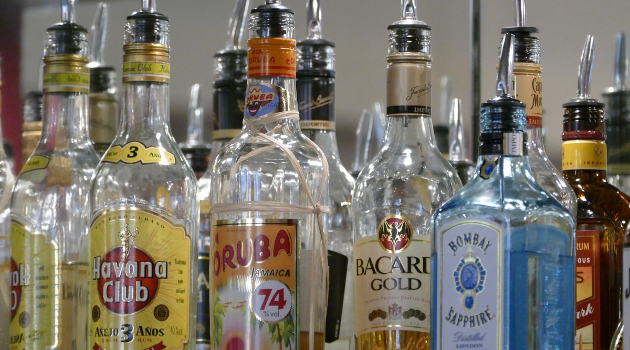
Rachel Reeves’ raising of alcohol duty has ‘failed spectacularly’ with booze taxes set to rake in nearly £1billion less than forecast this year, it has been claimed. Latest figures from HMRC show overall receipts from alcohol duty since April are down 4.3 per cent compared to last year. Over the same period, tax receipts from wine are down 6 per cent, while revenues from spirits and beer are down 5 per cent and 2.5 per cent, respectively. …if the trend to date continues over the rest of this financial year, then tax receipts from alcohol would come in at £12.1billion. This would be £900million less than the Office for Budget Responsibility forecast in March. Ms Reeves was told that, rather than bringing in more cash, her raising of levies had actually seen a loss of more than £220million over the first five months of the financial year. …Tory MP Neil Shastri-Hurst said…’The Chancellor’s alcohol duty hike was billed as a revenue-raiser. Instead, receipts are down £220million since April, the steepest fall in 50 years. A blow to pubs, producers and the Treasury alike.’
The government has defended their tax, making some valid points.
A Treasury spokesperson said: ‘Alcohol duty revenue is affected by a range of factors, not just tax rates, and it is misleading to compare receipts over a limited number of months. ‘The OBR is clear revenue would have been lower if we had not taken the decision to raise the rate in line with inflation which is helping to fund essential services while balancing the negative impacts of alcohol consumption.’
Since I’ve written that the short-run Laffer Curve isn’t necessarily the same as the long-run Laffer Curve, the Treasury spokesperson is making a legitimate argument.
But that message is inconsistent with the assertion about the “negative impacts of alcohol consumption.” Is the tax increase supposed to give politicians more money to spend? Or is the tax increase supposed to discourage drinking, in which case politicians might collect less revenue?
And I can’t resist commenting about the desire to “fund essential services.” Here are two questions for people making that argument.
The burden of government spending has jumped dramatically over the past six years, consuming an additional 5 percent of economic output. What societal variables have improved as a result of this much bigger fiscal burden?
The burden of government spending is 43.9 percent of GDP in the United Kingdom compared to 32.1 percent of GDP in Switzerland. What societal variables in the United Kingdom are superior compared to Swiss outcomes?
The bottom line is that the United Kingdom has a bloated and inefficient government that is stifling the private economy. And tax increases and marking a bad situation even worse.
By the way, the title refers to “Another Laffer Curve Blunder.” I wrote two months ago about how a class-warfare tax hike on “non-doms” has backfired, leading to less revenue.
Margaret Thatcher must be spinning in her grave when looking at the sordid (and bipartisan) combination of greed and incompetence that characterizes modern-day British politicians.